The Genesis Gallery
Welcome to our virtual art gallery of paintings related to the Genesis narrative. From Adam and Eve to the tower of Babel, these are some of the most stunning works of art depicting events from Genesis 1-11. This artwork is not just used throughout the website; it is also compiled here in a virtual museum of art. These are definitely some of the most beautiful masterpieces ever painted. With historical art like this, it is no wonder famous atheist Richard Dawkins calls himself a "cultural Christian"!
Thank you for stopping by. Enjoy the art!
(All paintings are public domain and attained via wikimedia commons, unless otherwise specified).
Chapter 1: Paradise
Creation began as a paradise. Genesis records that God looked upon His creation and saw that is was "very good." In Genesis 2, He places Adam in a garden within His good creation. Plants were given as food for all animals. The first man, Adam, is placed there to live, presumably immortal, as God's image-bearer and representative. As a sign of his given dominion, Adam names the animals. But while each kind of animal has its mate, no suitable partner can be found for him. The first and only thing creation lacks is woman. God forms Eve from Adam's rib, and the two first humans dwelled in paradise together.
The Christian church has understood this story to be a true historical account for a majority of its own history. It is God's explanation for the origin of the world, given to Moses on Mt. Sinai as part of the Torah. Christians long accepted this story to be literally true. These paintings spanning centuries are a testament to traditional Christian theology. They may not be biologically accurate according to current creationist thinking, but they remain stunning depictions of a Bible story that should never have been removed from the list of Biblical narratives that Christians almost universally agree are true history.
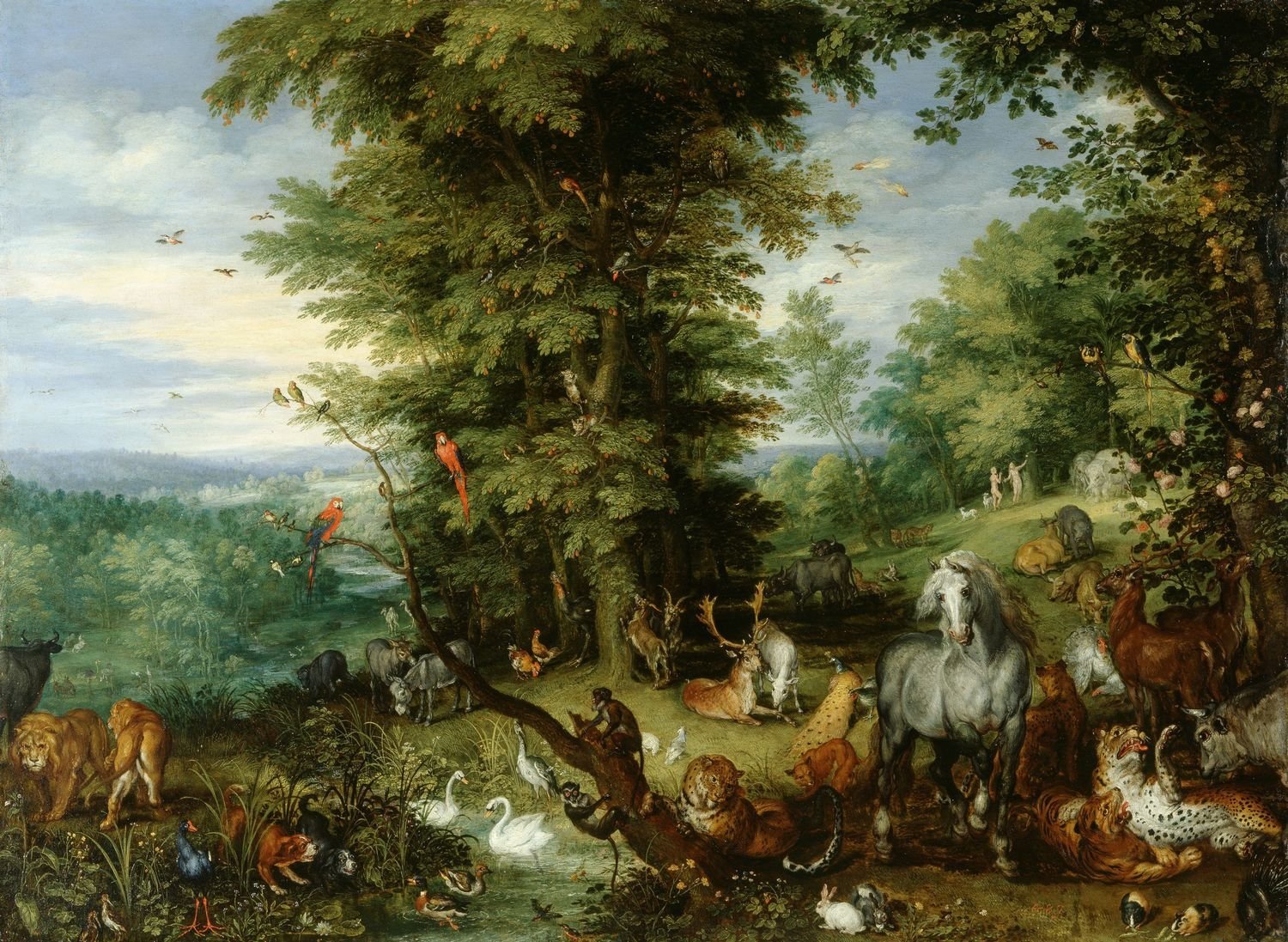
Adam and Eve in the Garden of Eden (1610)
Jan Brueghel the Elder (1568-1625)
Oil on copper
Royal Collection, Windsor
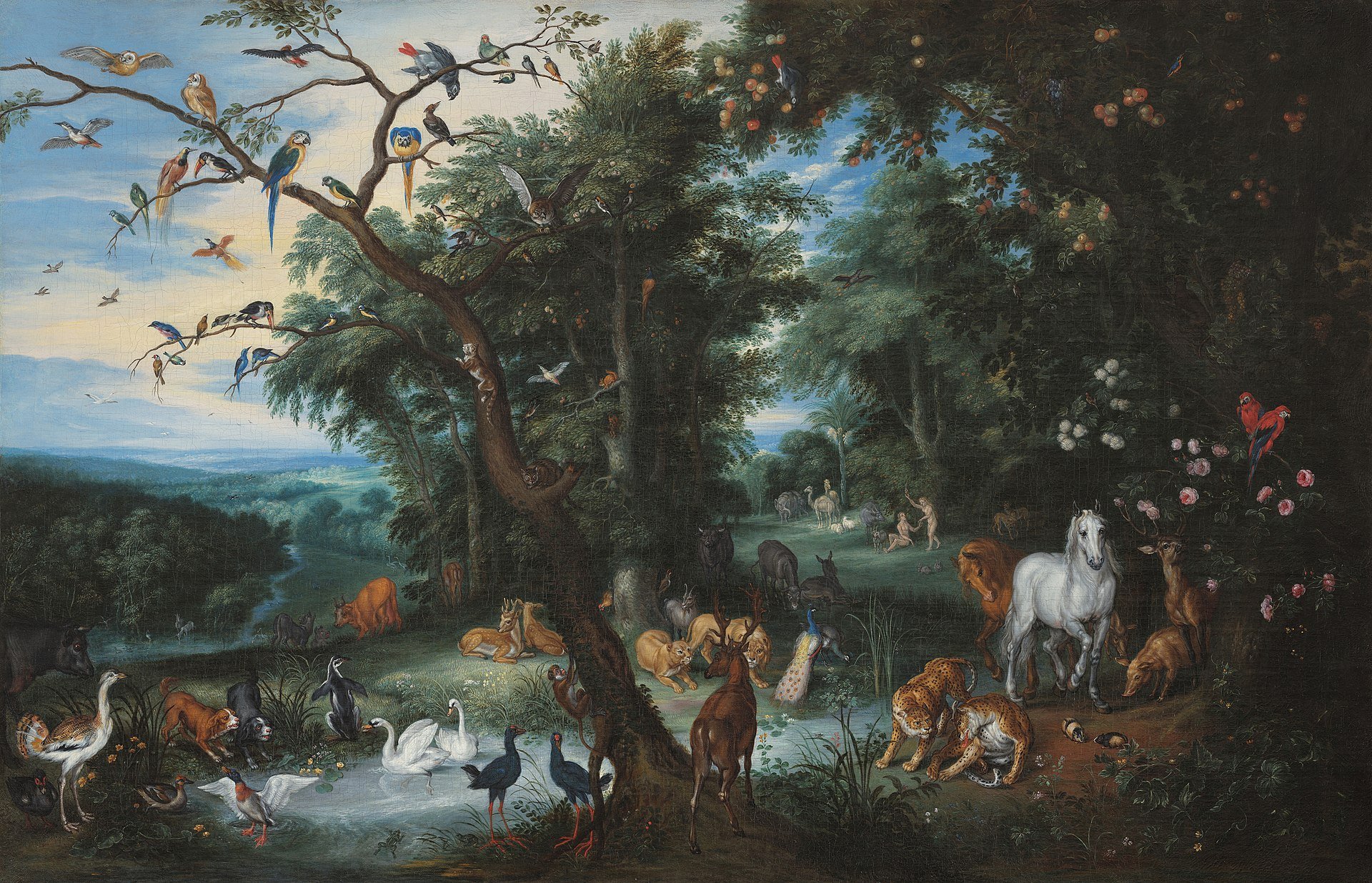
The Garden of Eden (1655-1661)
Izaac van Oosten (1613-1661)
Oil on canvas
Toledo Museum of Art
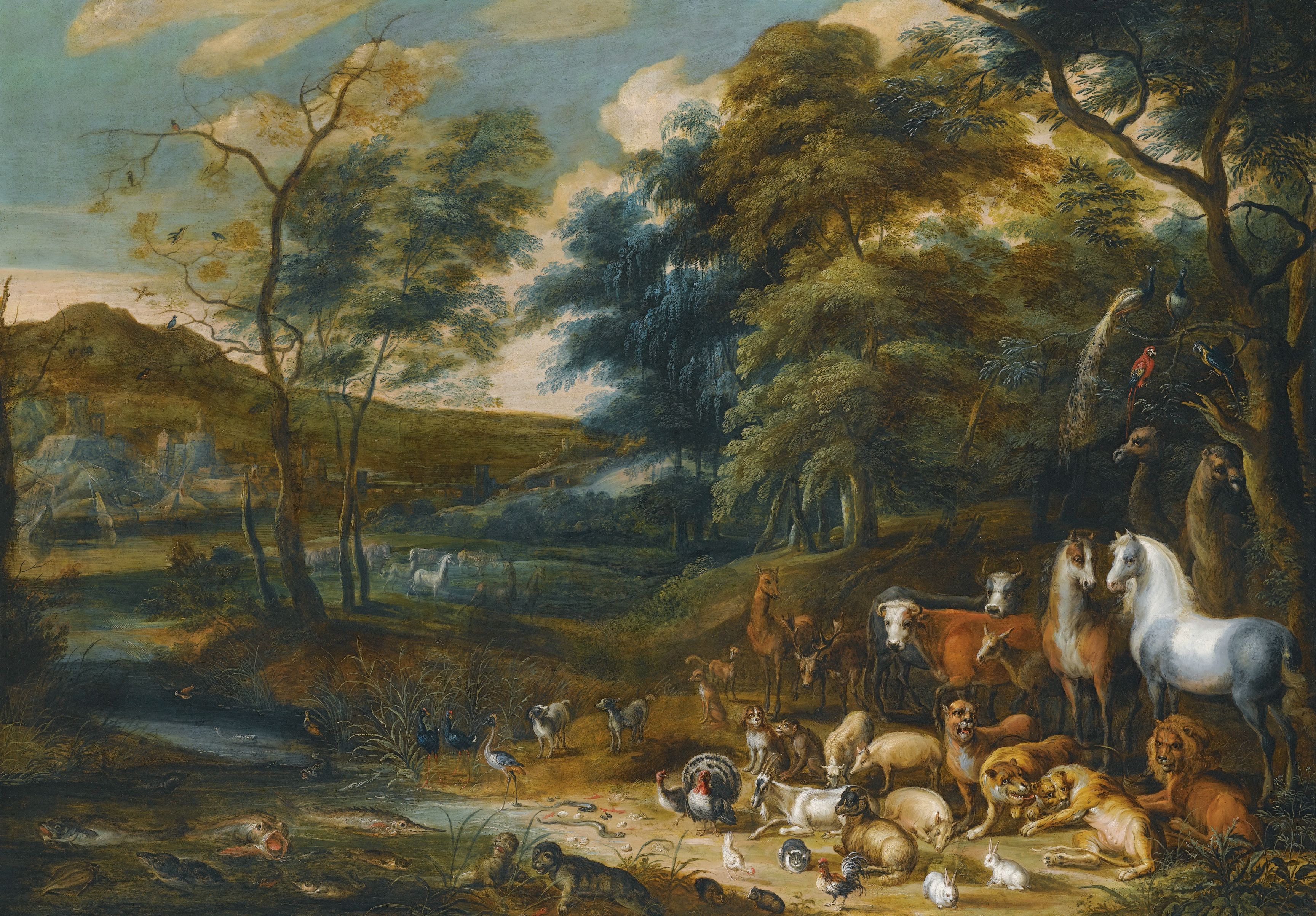
The Garden of Eden (17th Century)
Izaac van Oosten (1613-1661)
Oil on copper
Private collection
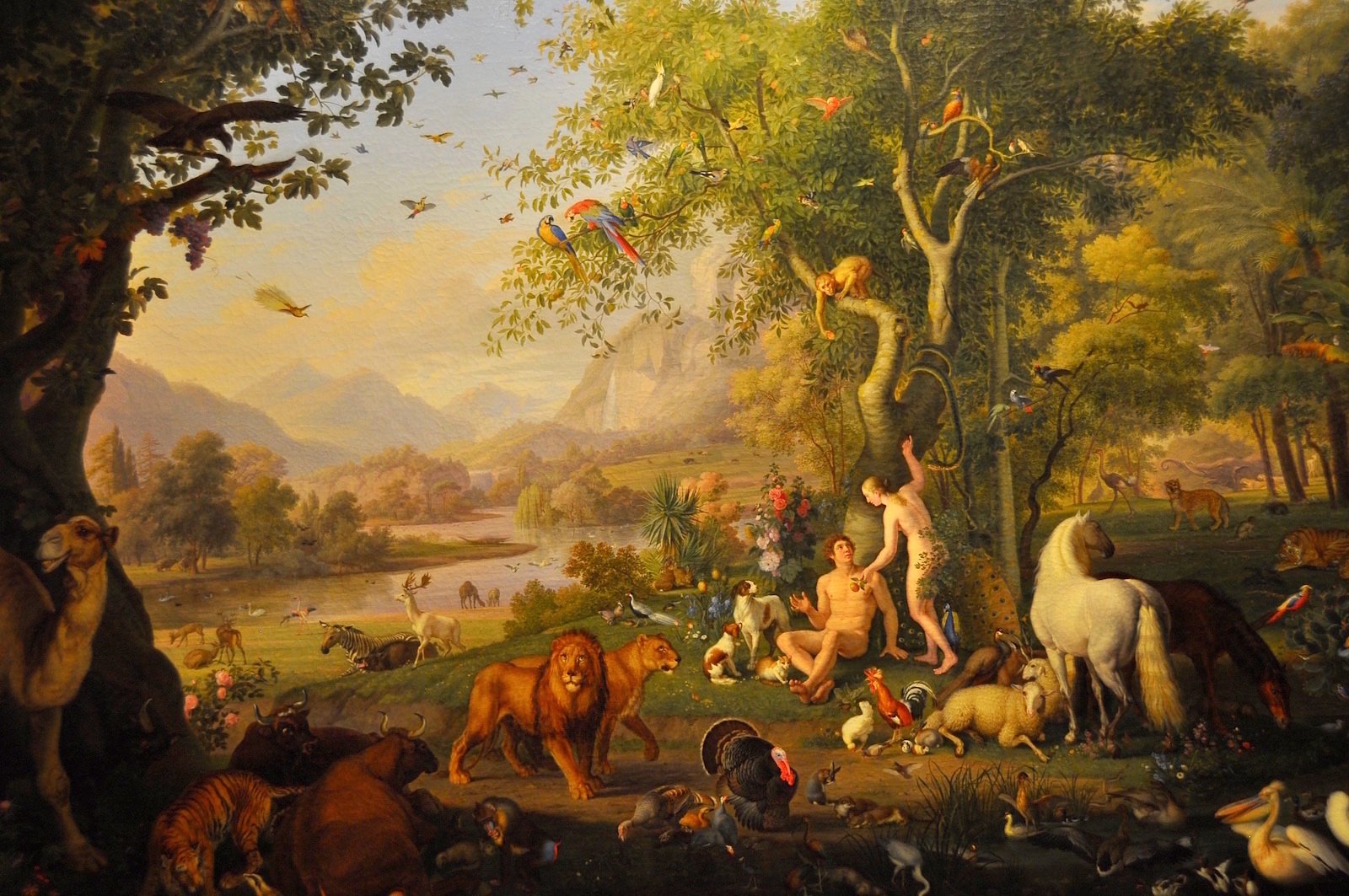
Adam and Eve in the Garden of Eden (1800-1829)
Johann Wenzel Peter (1745-1829)
Oil on canvas
Vatican Museums, Vatican City
(As you can see, traditional art reflected the long-held Christian view that creation was a paradise, lacking in disease, death, predation, or other such ailments. This is where creation and evolution are most at odds. I use the painting above to demonstrate this point, and that's why we use it so much.)
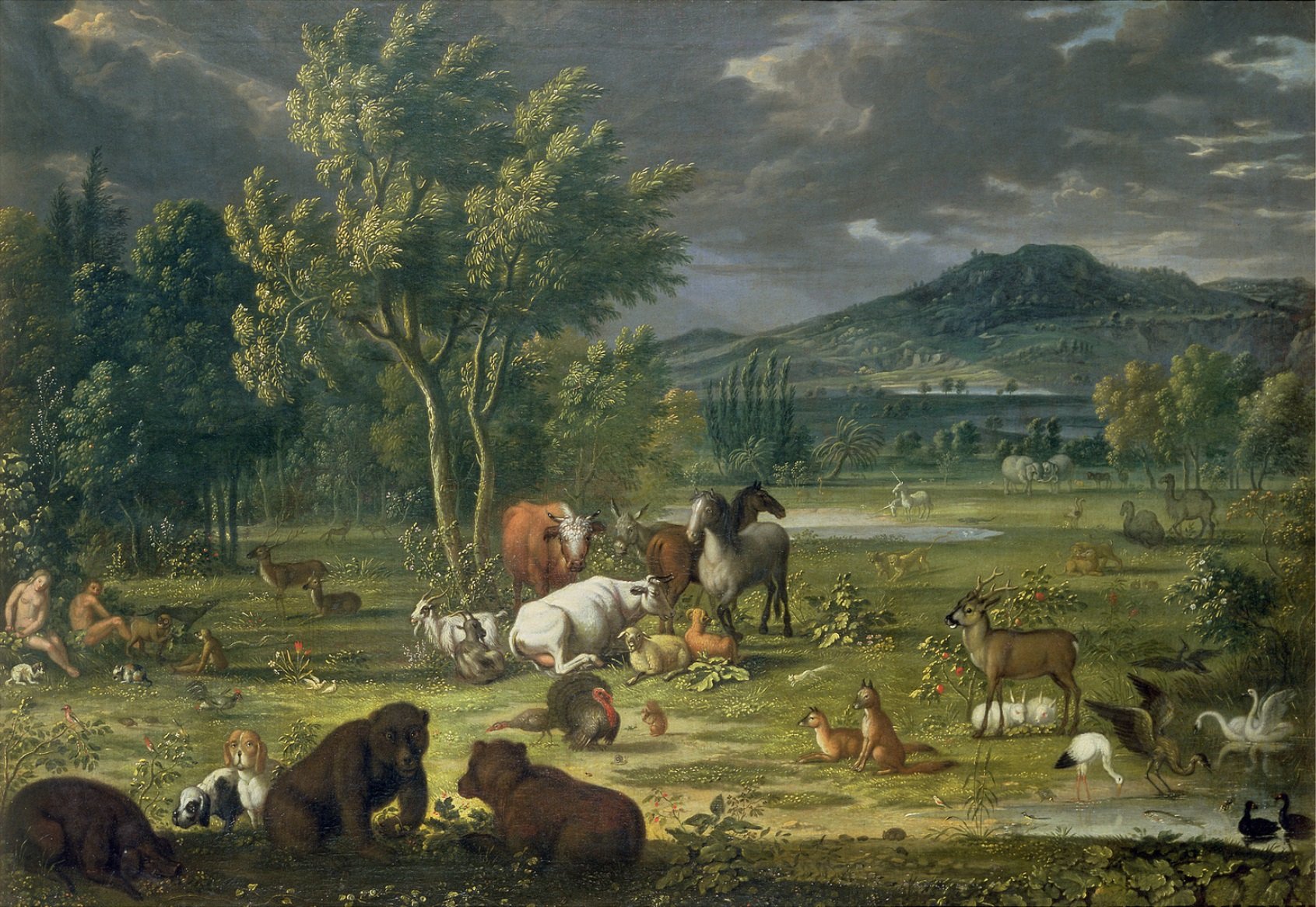
Adam and Eve in Paradise (before 1829)
Johann Wenzel Peter (1745-1829)
Oil on canvas
Private collection
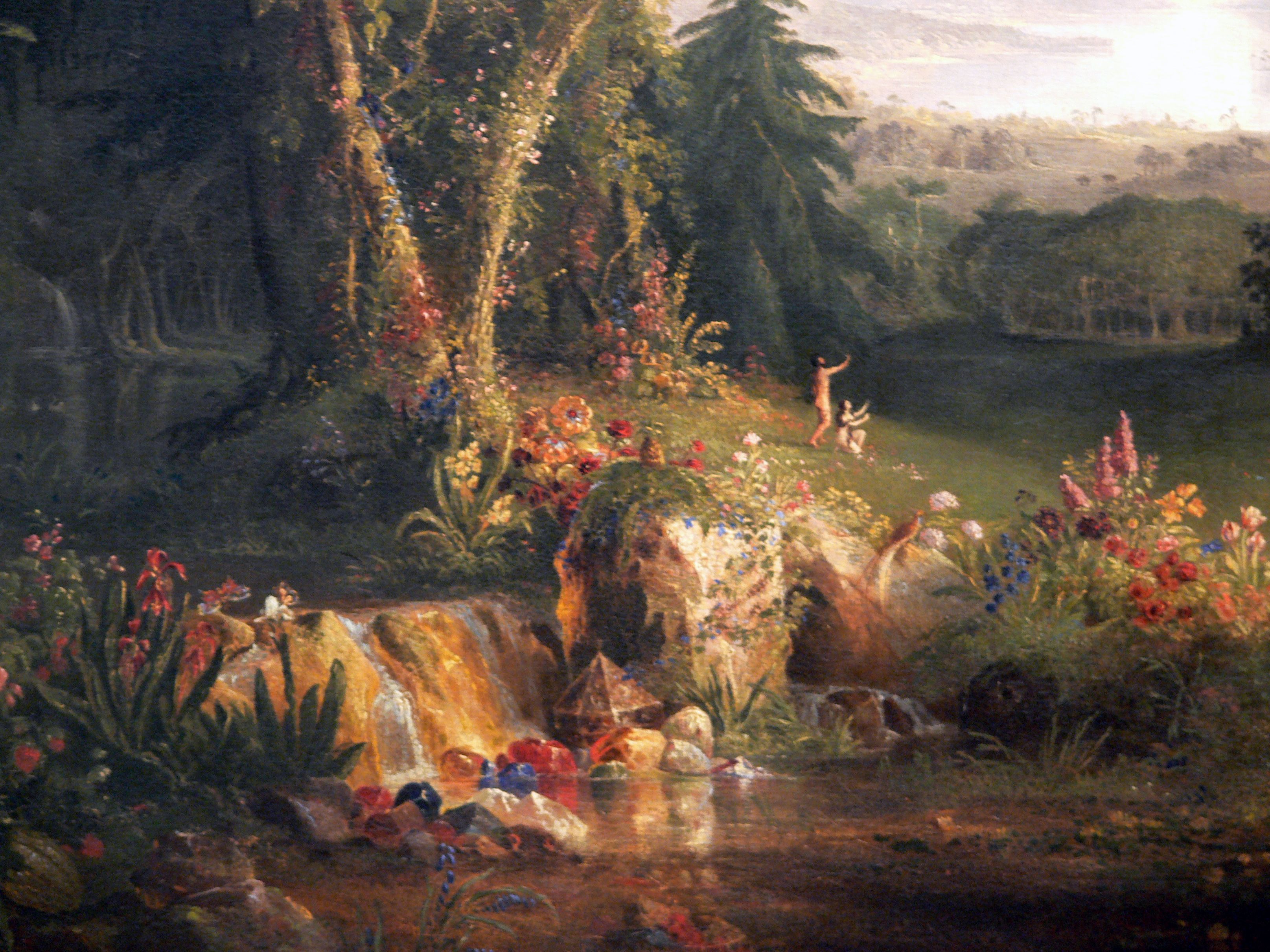
The Garden of Eden (1828)
Thomas Cole (1801-1848)
Oil on canvas
Amon Carter Museum of American Art
(I love the posture of Adam and Eve in this one. Their hands outstretched makes it seem like they are delighting in something out of view, pointing out something amazing to one another. Hopefully the thing they are looking at is not a serpent or a fruit.)
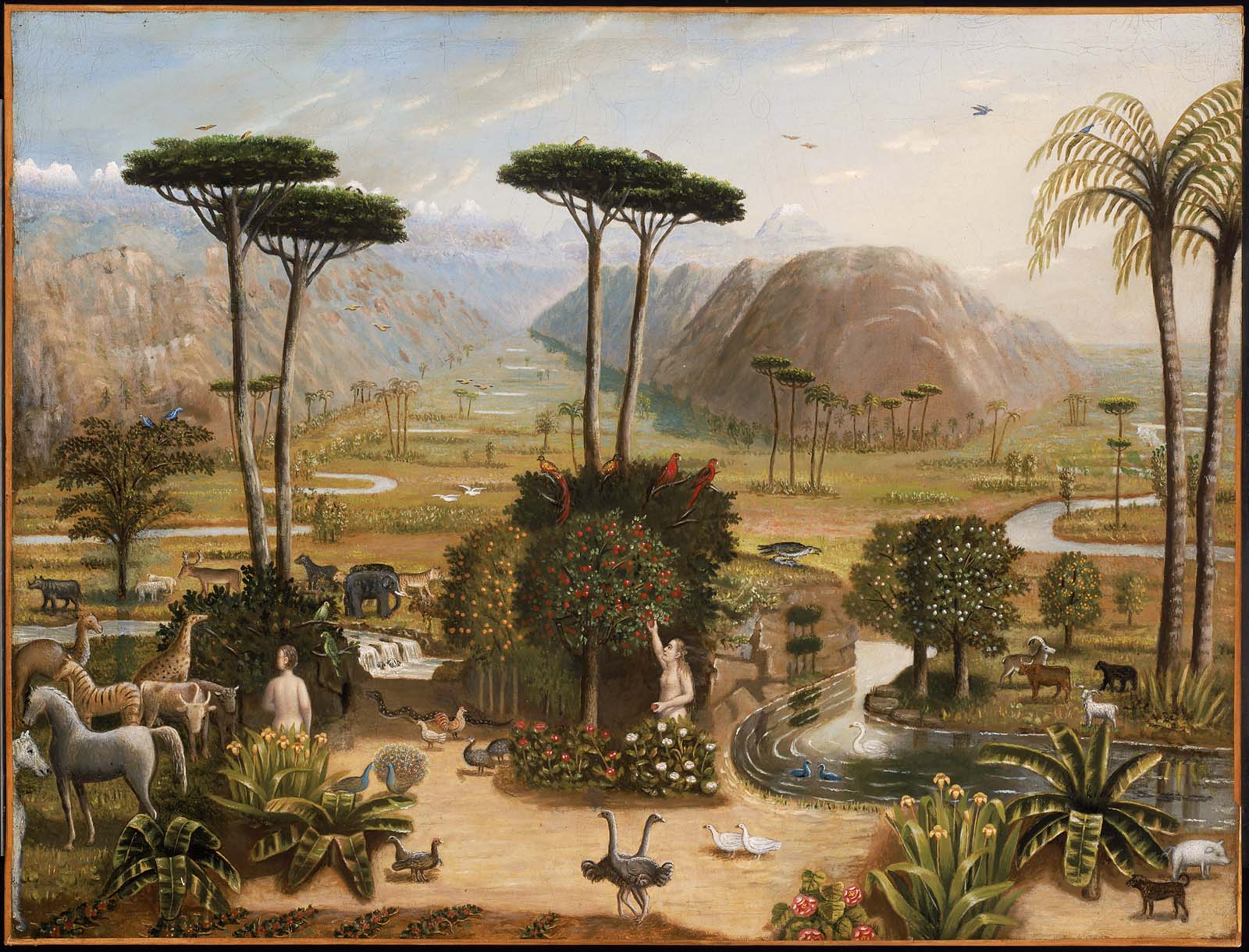
The Garden of Eden (~1860)
Erastus Salisbury Field (1805-1900)
Oil on canvas
MFA Boston
(A creepy one to say the least. The serpent slithers away from Eve as she picks the fruit, and Adam seems to be a lookout, maybe making sure their Creator is nowhere near? One advantage to paintings is that you can only capture one moment. This is the moment before the world was ruined.)
Chapter 2: Expulsion
No one knows how long the world was a paradise. But sometime after creation, Eve is tempted by the mysterious serpent, who has long been thought to be spiritually possessed by Satan. God had forbidden them to eat of the fruit from the Tree of Knowledge; an important act that preserves the free will of God's image-bearers. Eve falls for the serpent's lies and eats first, but Adam was with her when she ate and accepted the forbidden fruit as well. His complicity earns him primary blame throughout the Biblical narrative, as the apostle Paul himself references Adam's sin, not Eve's, as the origin of all death.
"Therefore, just as sin came into the world through one man, and death through sin, and so death spread to all man because all sinned--for sin was in the world before the law was given, but sin not counted where there is no law. Yet death reigned from Adam to Moses, even over those whose sinning was not like the transgressions of Adam, who was a type of the one who was to come." (Romans 5:12-14)
Adam and Eve's shame leads to the first clothes worn. The first instance of animal death in the Bible is God using skins to clothe them. Satan is cursed, Adam and Eve are condemned to suffer in their toils, whether that be physical labor (man) or childbirth (woman). They are cast from the garden to make a life for themselves elsewhere. Their offspring are given no choice in paradise but are now born with sinful desires already ingrained in their being. Thus, both natural and moral evil find their footing in the world after the Fall of Man. A stumbling block of some today is the injustice of condemning the many for the sins of one. But this is not the end of the story.
"But the free gift is not like the trespass. For if many died through one man's trespass, much more have the grace of God and the free gift by the grace of that one man Jesus Christ abounded for many." (Romans 5:15)
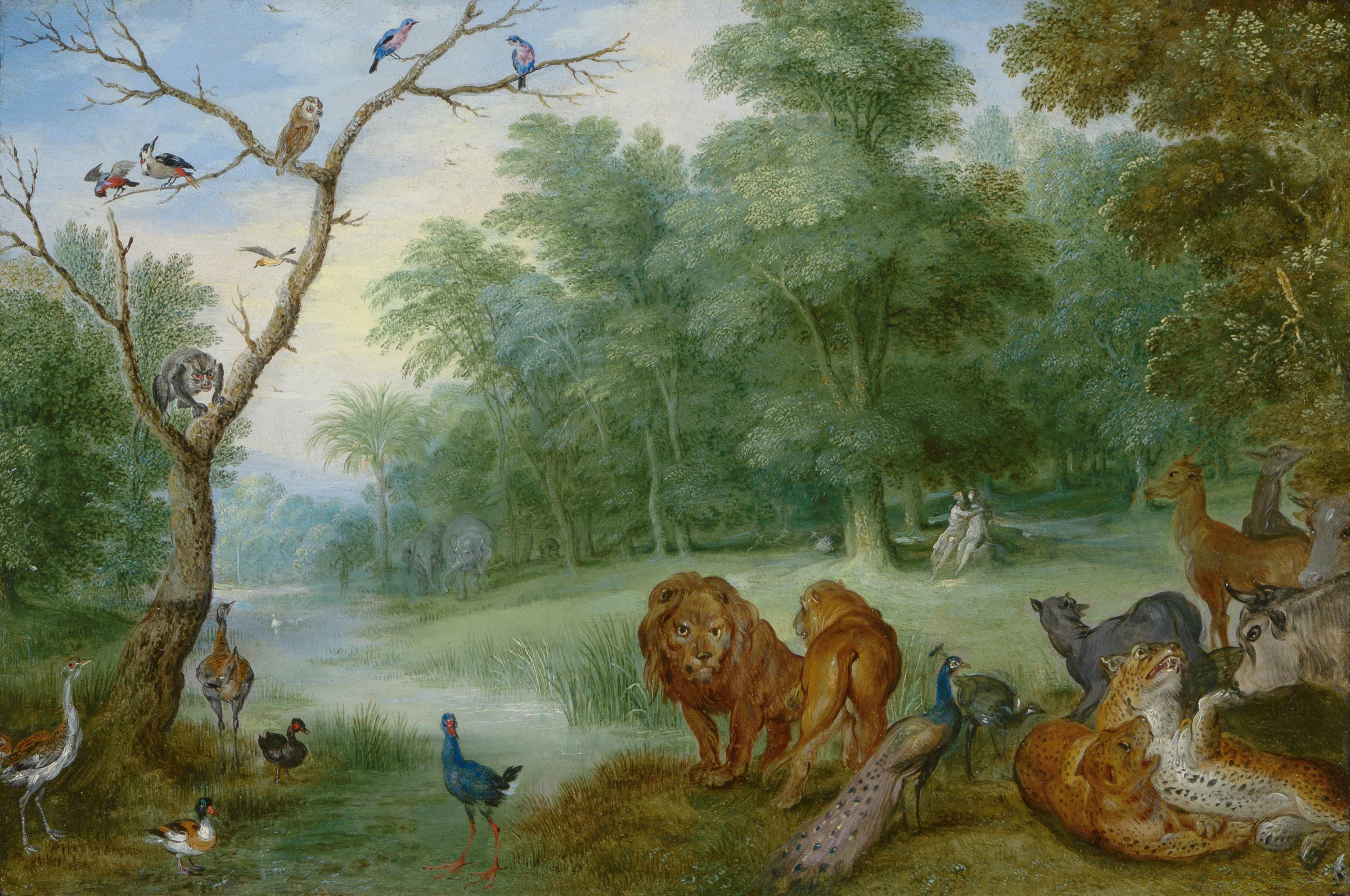
Paradise with the Fall of Adam and Eve (~1630)
Jan Brueghel the Younger (1601-1678)
Oil on copper
Mauritshuis art museum, Netherlands
(Based on the title, it seems that Adam and Eve are in the process of succumbing to temptation, but here the artist chose to blur the background. I love the expression of the lion in the foreground, as if he knows the humans are about to mess everything up.)
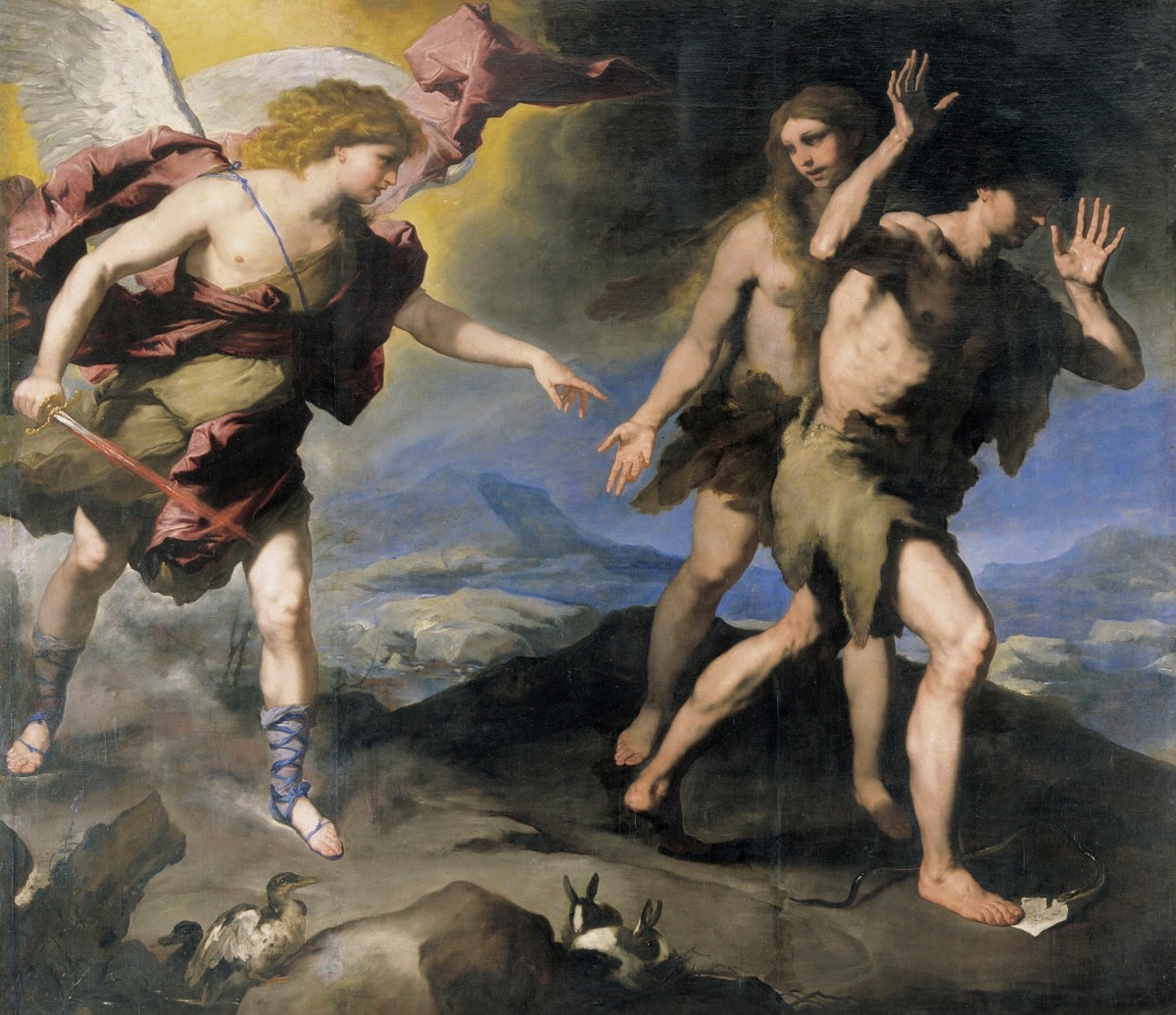
Expulsion from Paradise (1632-1705)
Luca Giordano (1634-1705)
Oil on canvas
Gatchina Palace
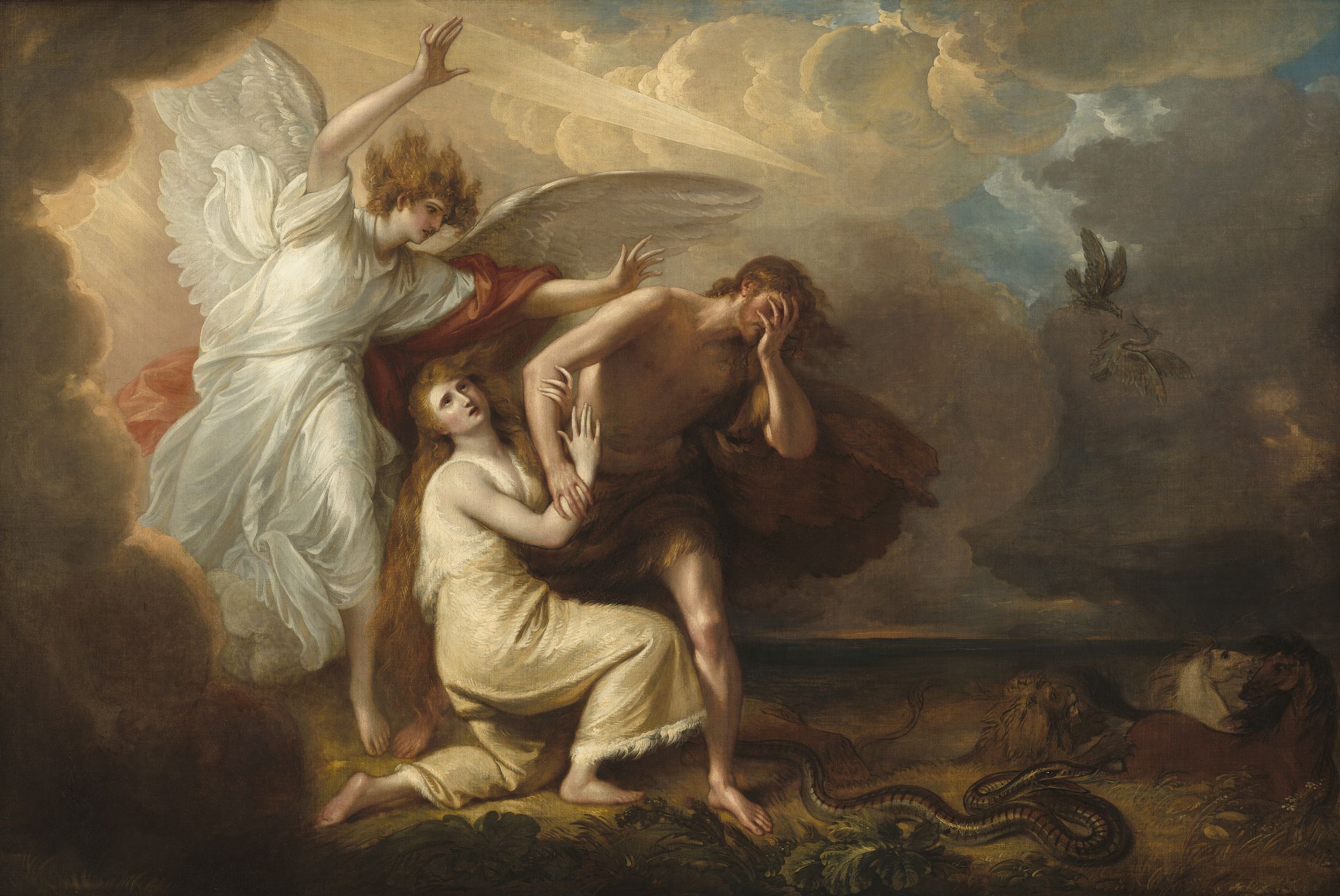
Expulsion from Paradise (1791)
Benjamin West (1738-1820)
Oil on canvas
National Gallery of Art
(My personal favorite in this gallery. By far the painting I stared at the most while adding it onto the list. I am personally moved by the snake fleeing ahead of the humans, the birds fighting in the sky, and Eve grabbing onto Adam's arm. A haunting piece.)
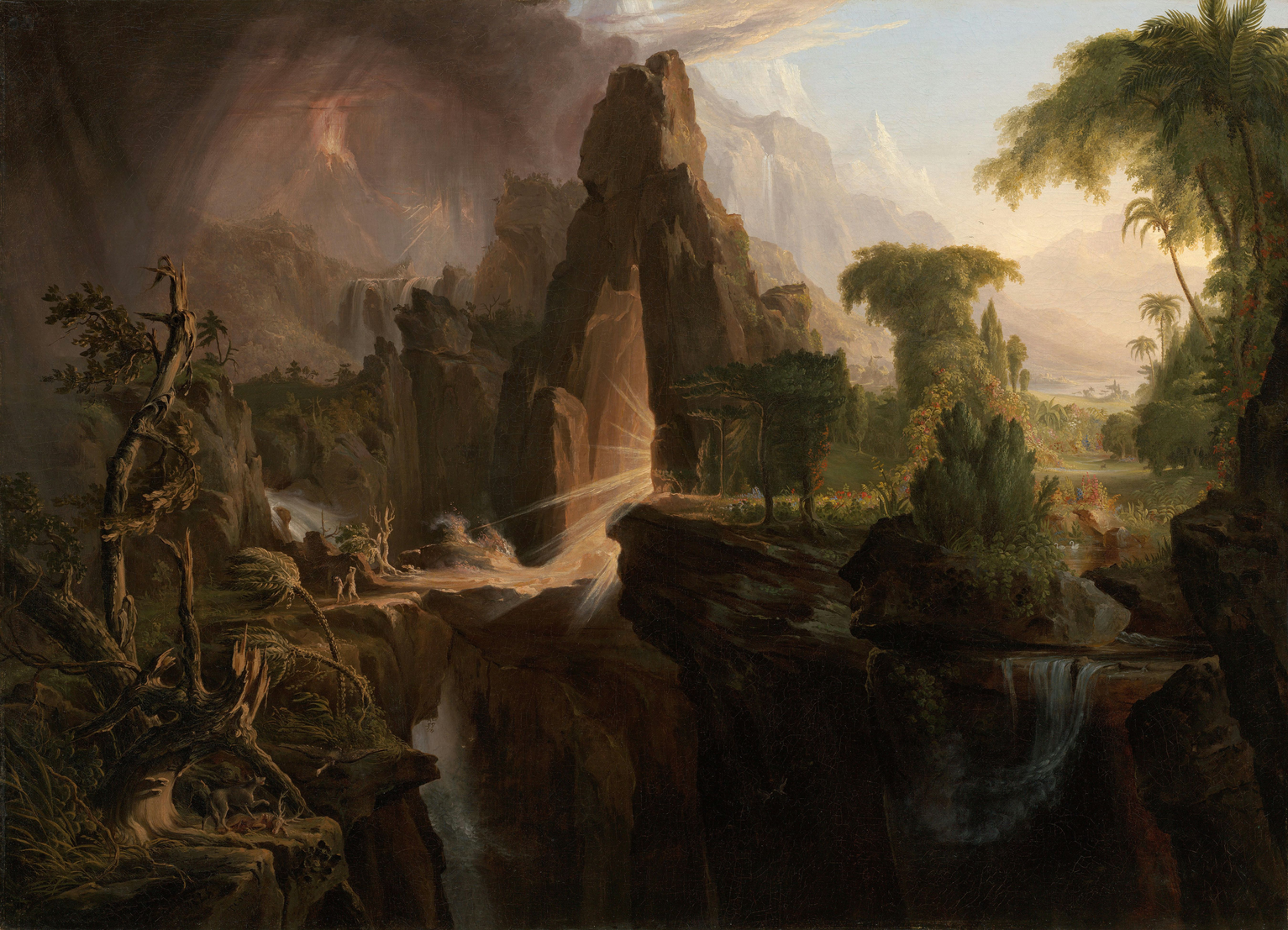
Expulsion from the Garden of Eden (1828)
Thomas Cole (1801-1848)
Oil on canvas
MFA Boston
(My favorite painting I got to see at the MFA in Boston. Not many paintings show the glories of paradise and horrors of the outside world in the same frame. In the bottom left corner, a wolf preys on a deer, heavily implying there was no such death in paradise.)
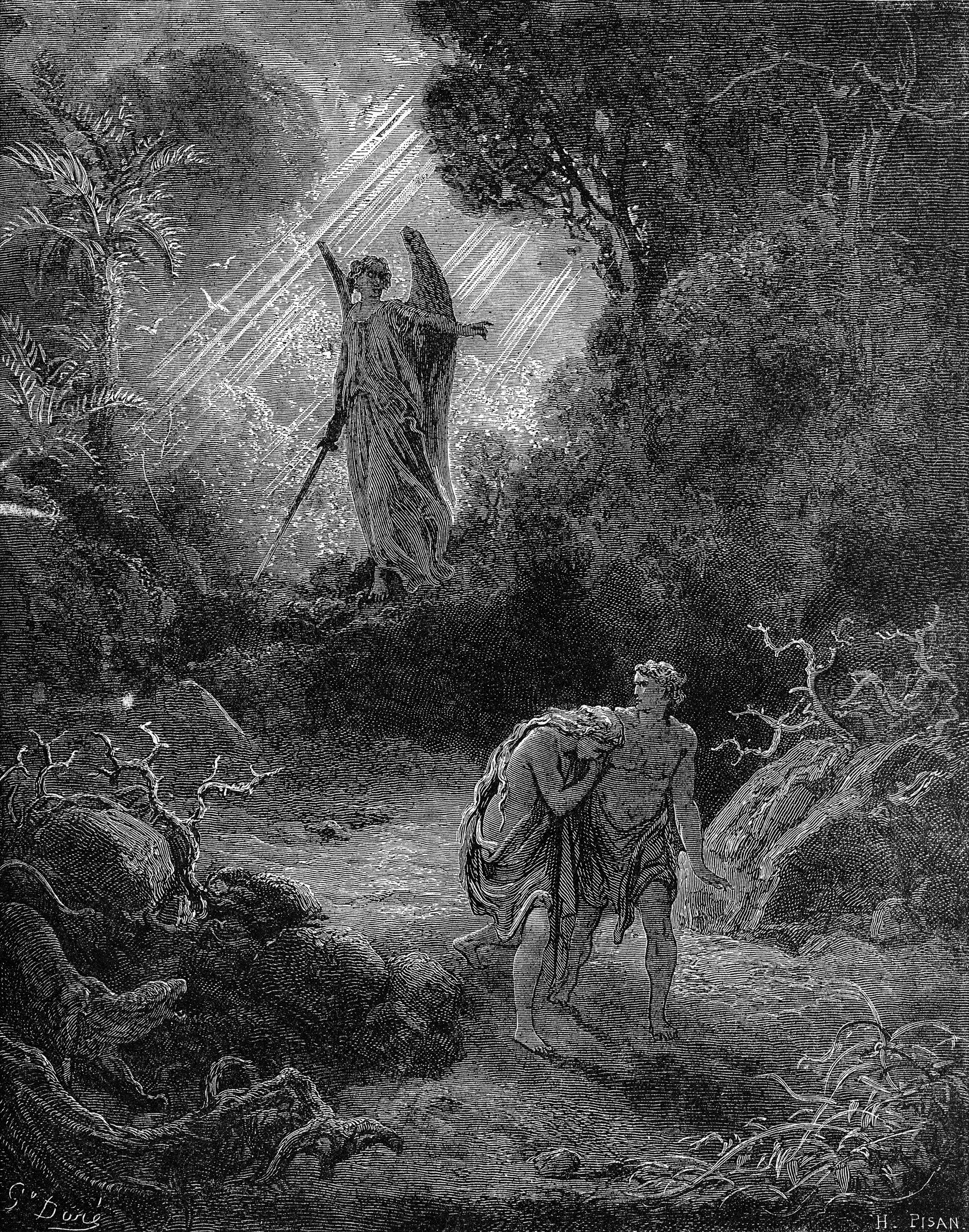
Adam and Eve are Driven Out of Eden (before 1883)
Gustave Doré (1832-1883)
Depiction from Milton's Paradise Lost
Chapter 3: Deluge
The moral evil that began with Adam spreads across the world. God looks upon his creation, sees the corruption, and regrets making mankind. He must begin anew, wiping out the world He had made to shape a new earth. By association, the animals too must be judged for the sins of their stewards.
"And God looked upon the earth, and behold, it was corrupt; for all flesh had corrupted his way on earth."
But a remnant of the pre-flood world must survive. One man alone finds "grace in the eyes of the Lord." It is before the great catastrophe of judgement that God establishes a covenant with the only righteous man: Noah. This promise gives confidence to Noah and his family that they are not forgotten; instead, they are the future of the human race, and their cargo is the future of the natural world.
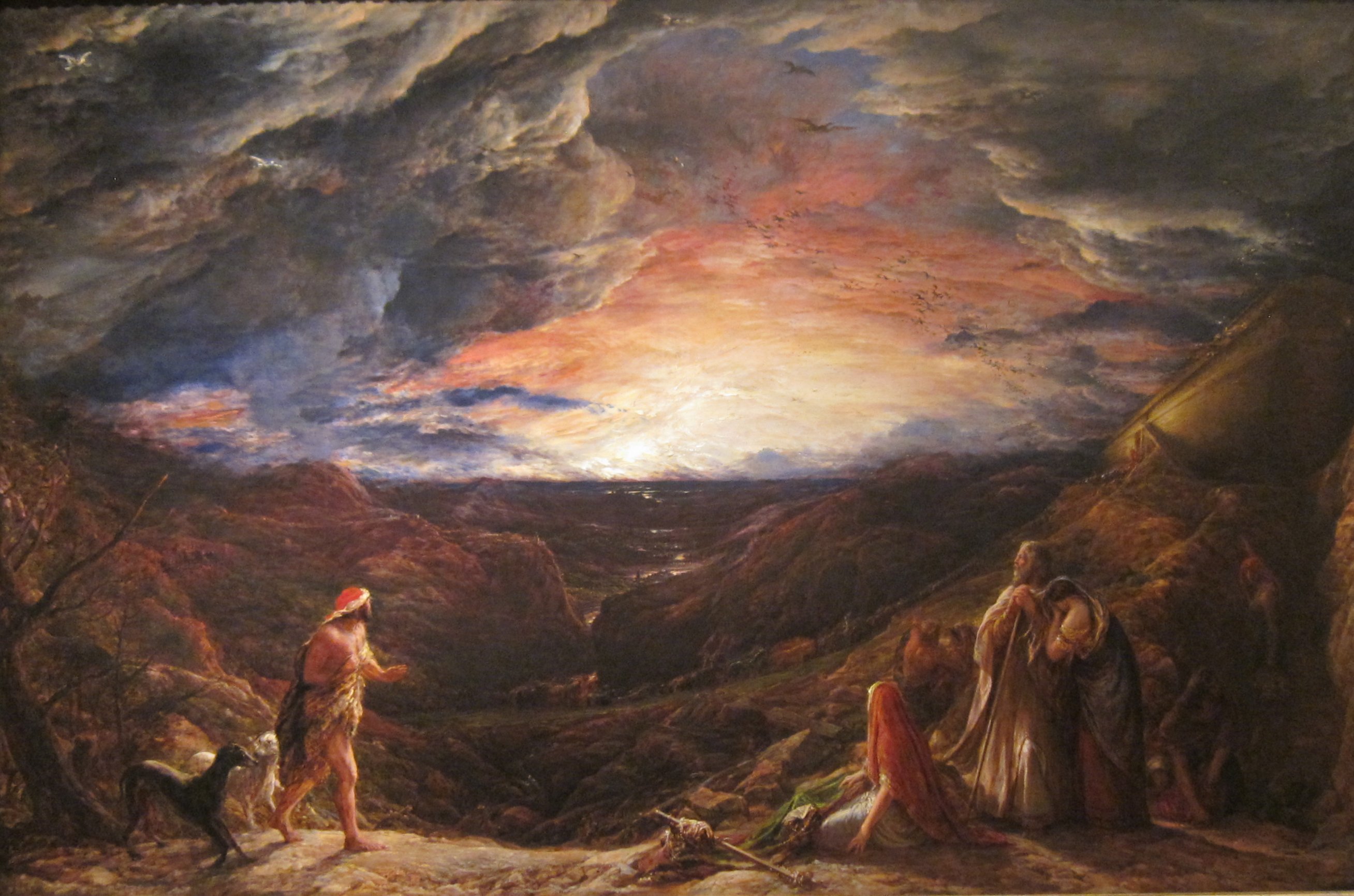
The Eve of the Deluge (1828)
John Linnell (1792-1882)
Oil on canvas
Cleveland Museum of Art
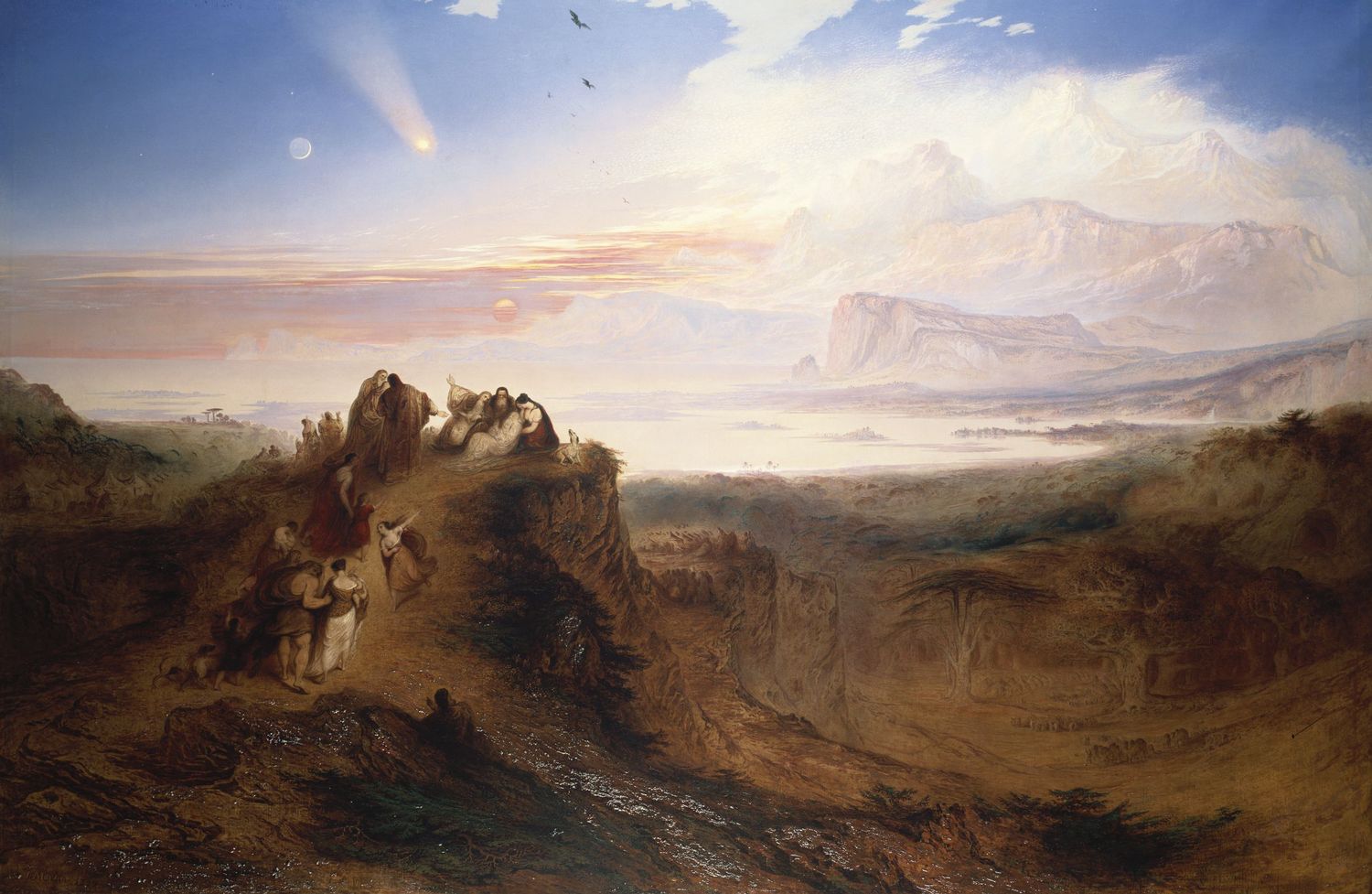
The Eve of the Deluge (1840)
John Martin (1789-1854)
Oil on canvas
The Royal collection
(Wow! This artist depicts the day before the flood as a pristine, beautiful landscape. Many creationists accept that a meteor was involved in kickstarting flood process [we do have a crater in Mexico], so the meteor falling through the sky might be somewhat accurate.)
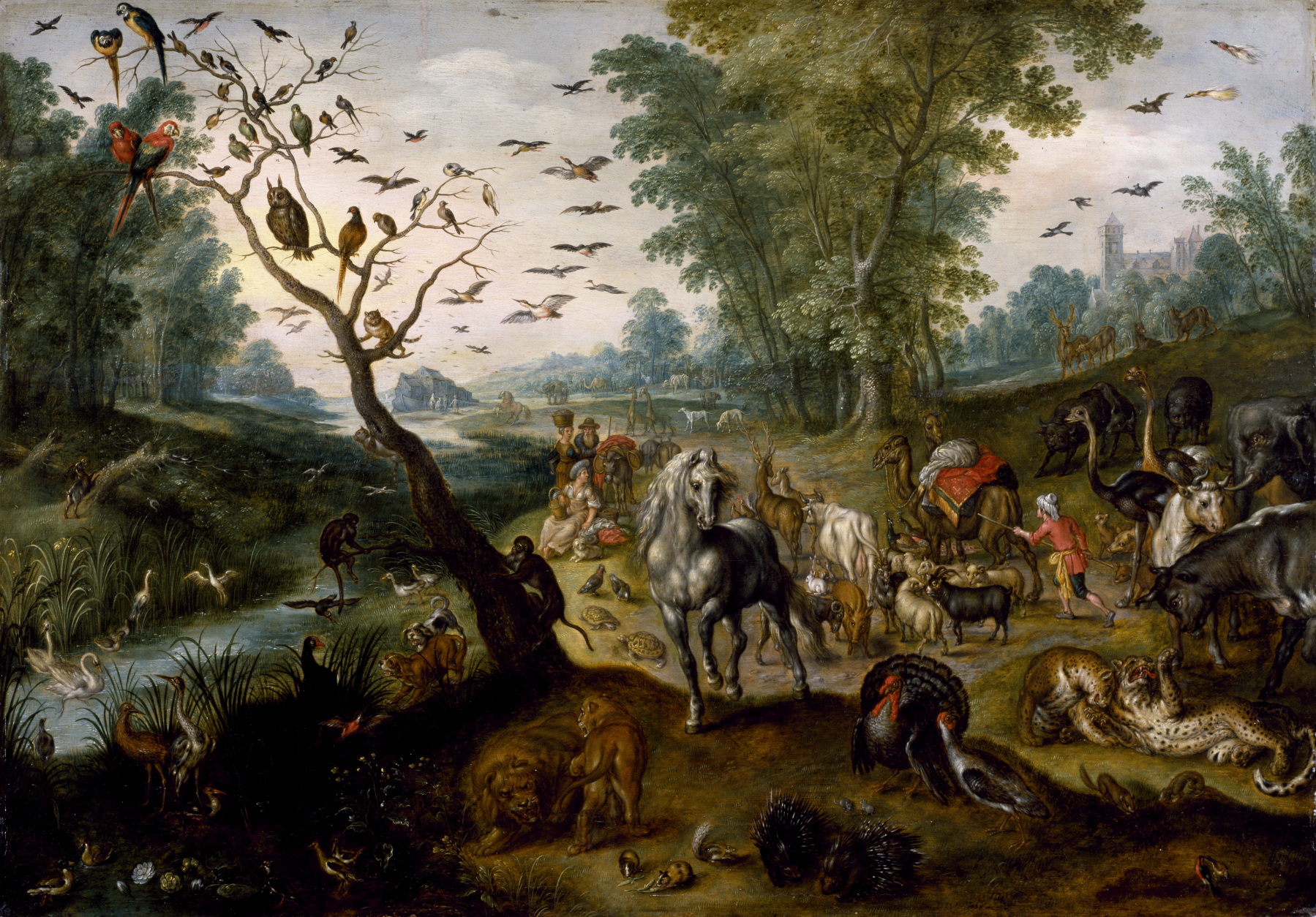
Noah's Family Assembling Animals Before the Ark (~1660)
Jan van Kessel the elder (1626-1679)
Oil on panel
The Walters Art Museum
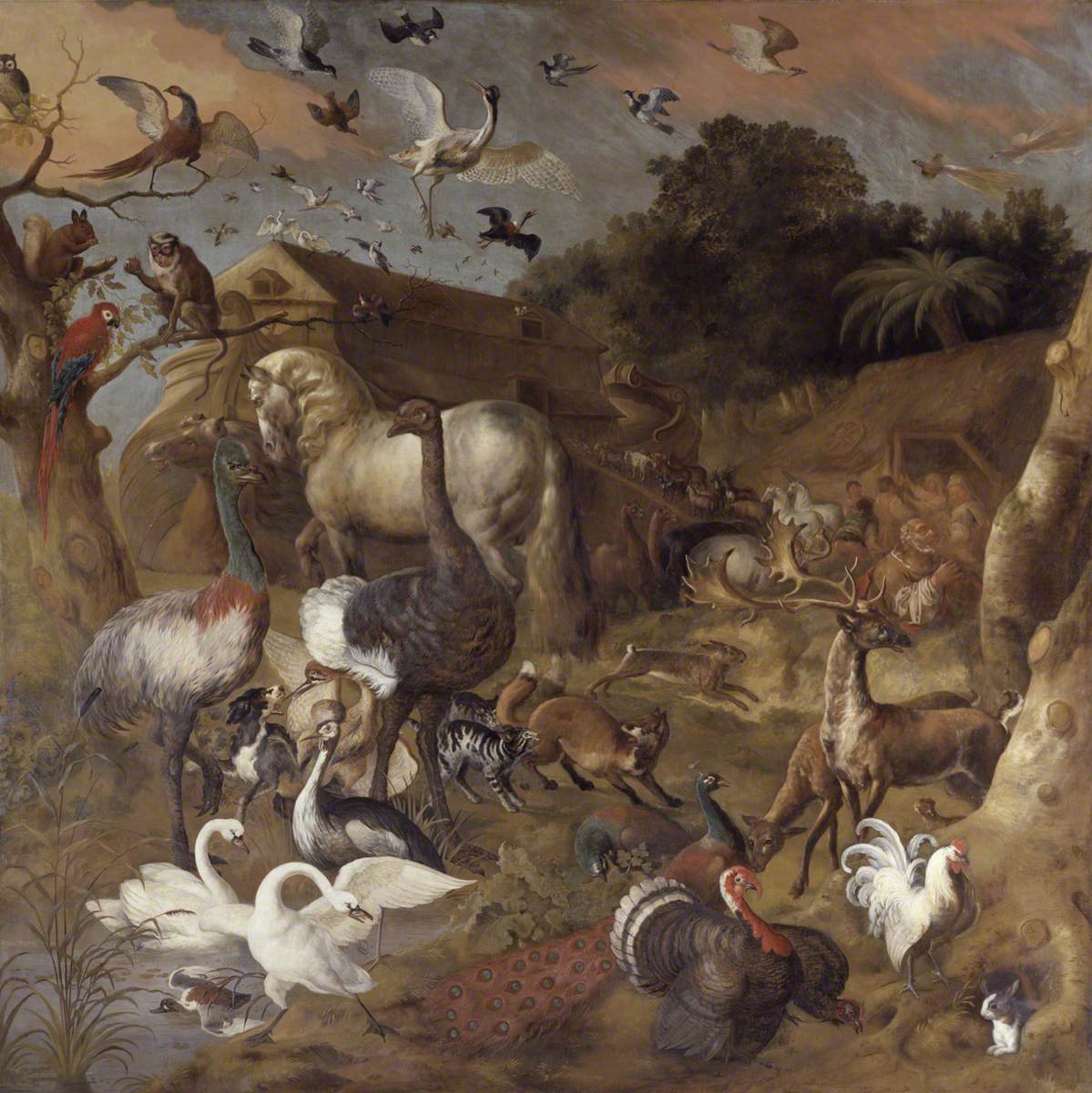
Noah's Ark (~1710)
Jan Griffier (1652-1718)
Oil on canvas
Bristol Museum & Art Gallery
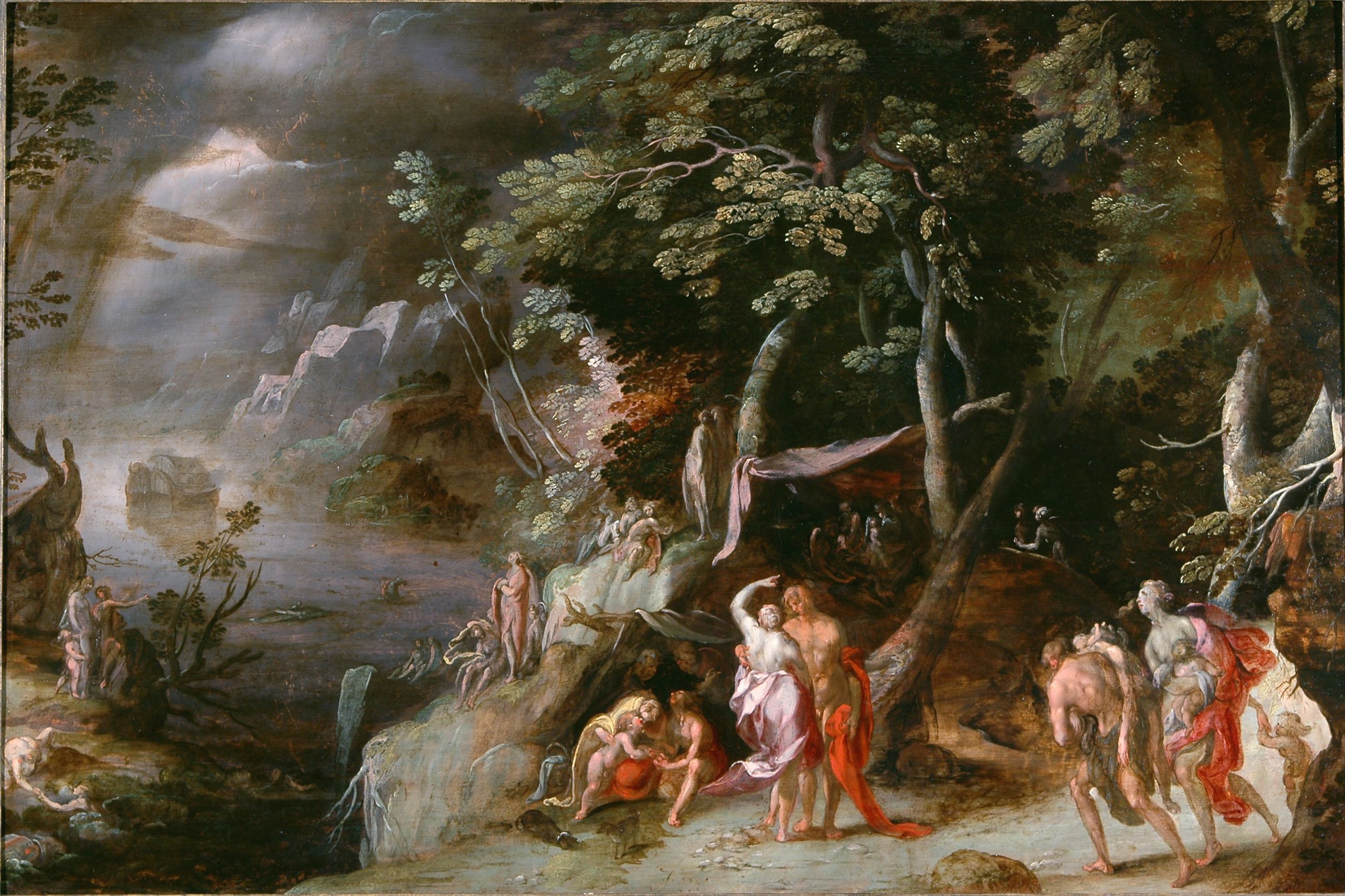
The Deluge Flood (16th or early 17th century)
Jan Nagel (c. 1560-1602)
Painting
Frans Hals Museum
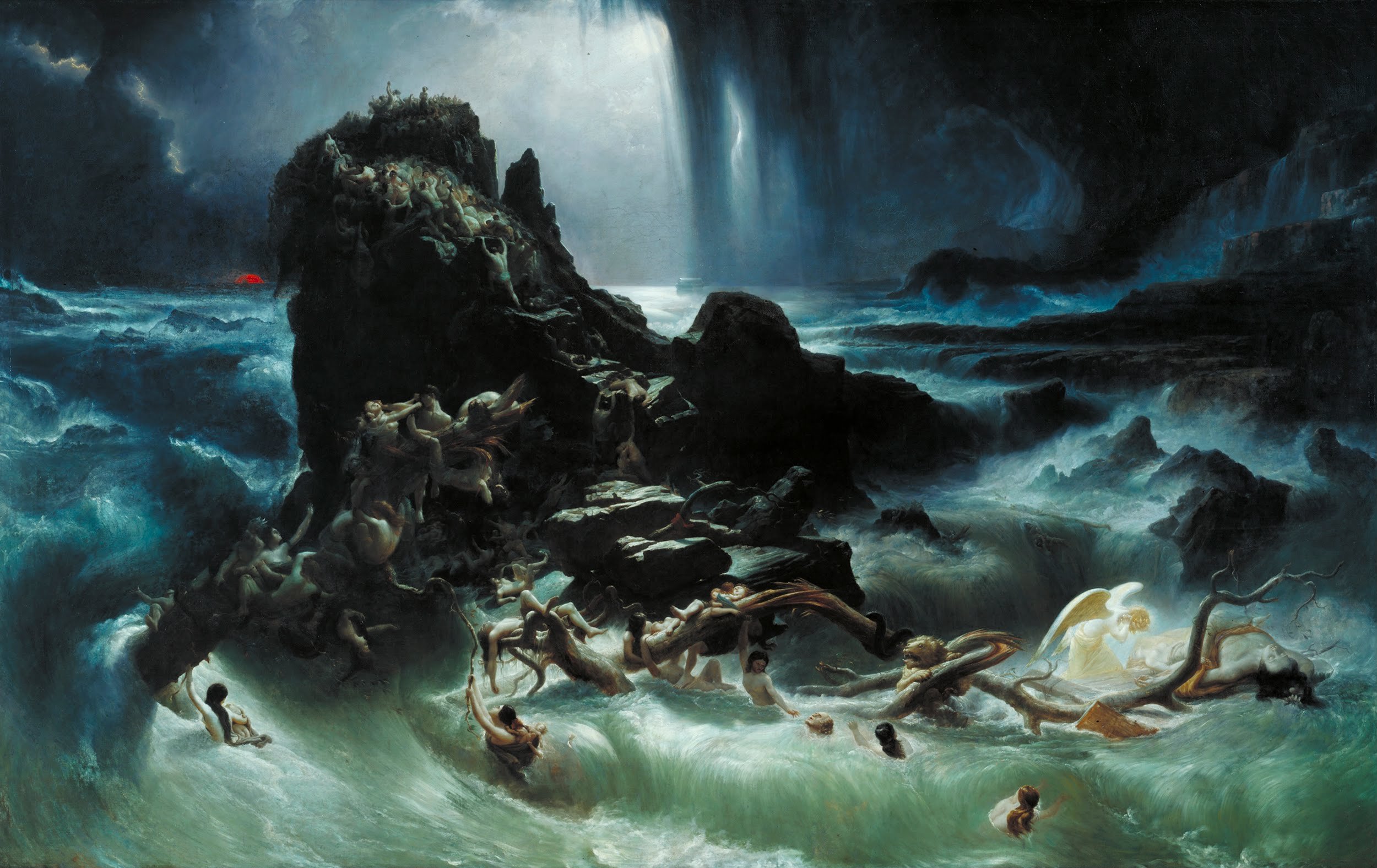
The Deluge (1840)
Francis Danby (1793-1861)
Oil on canvas
Tate Gallery, Britain
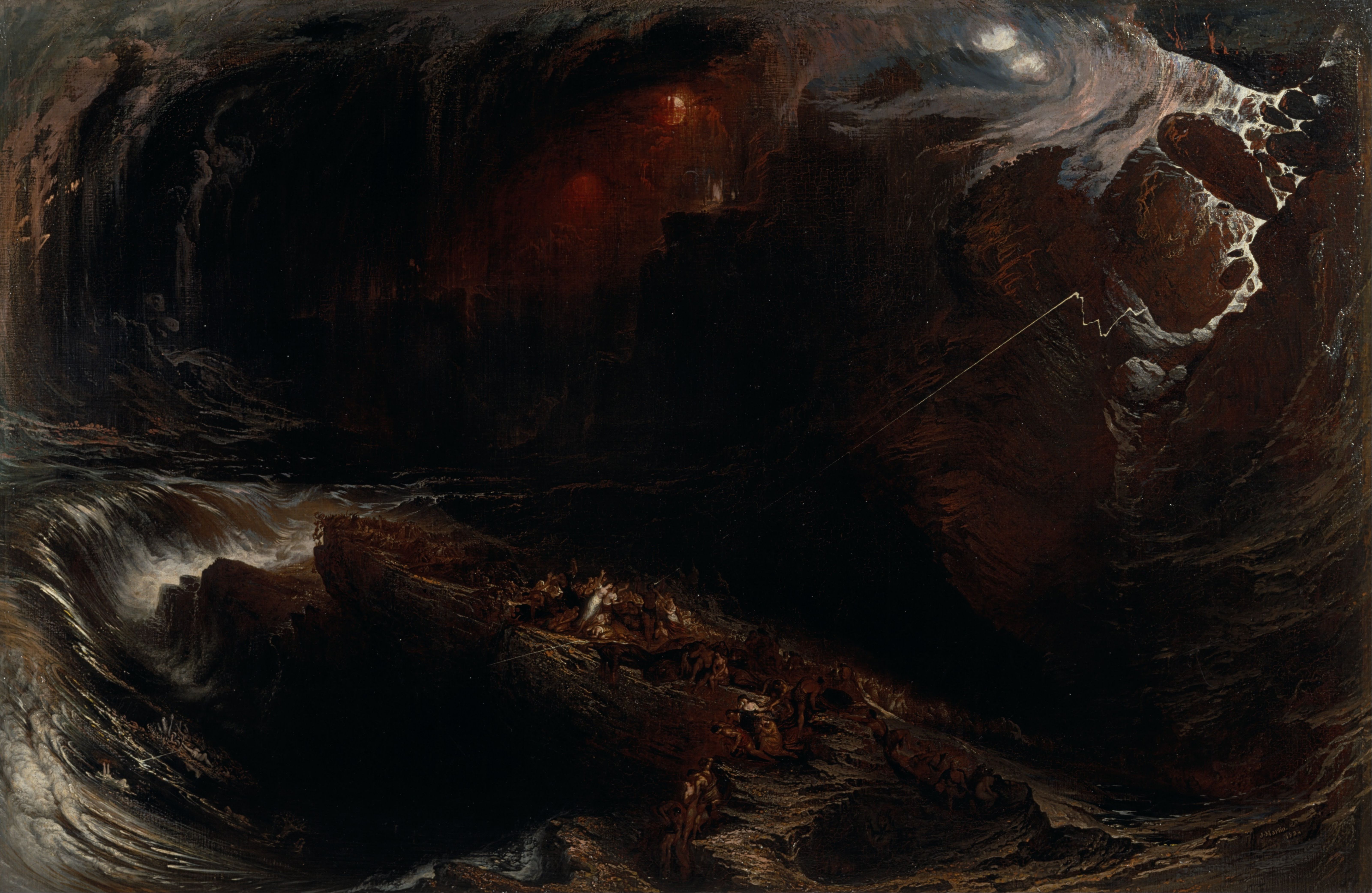
The Deluge (1844)
John Martin (1789-1854)
Oil on canvas
Yale Center for British Art
(Chaotic, dark, depressing, John Martin's oil painting certainly conveys the hopelessness of the Flood.)
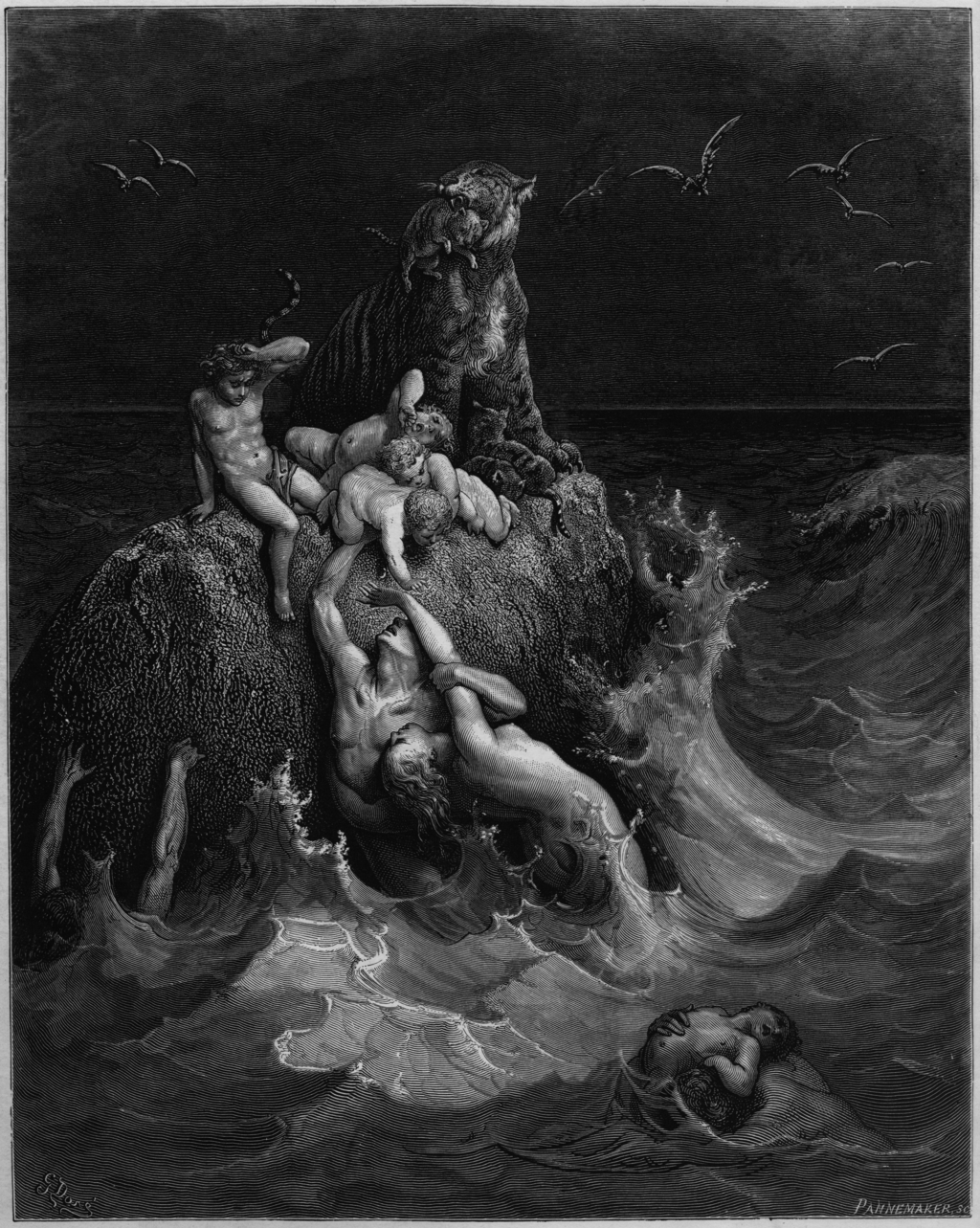
The Deluge (1866)
Gustave Doré (1832-1883)
Plate from Dore's illustrated version of the Bible
Chapter 4: Hope
The wrath of God prevailed for one hundred and fifty days. Then, supernaturally, God stops the flood. As Christ will later do to storms on the sea of Galilea, God silences the storm by sending a wind asswage the waters and closes the fountains of the deep and the windows of heaven. The ark settles on Mount Ararat, with its passengers safe, alive, and remembered.
"And God spake unto Noah, saying, 'Go forth of the ark, thou, and thy wife, and thy sons, and thy sons wives with thee."
A new world awaits them. Their first act of Noah as steward of the new creation is to build an altar to God. The covenant is alive, and now God adds to His promises. Never again will He destroy all living things or curse the earth for the transgressions of men, for "the imagination of man's heart is evil from his youth." He places the rainbow in the sky as a reminder of his words and a symbol of the covenant. The future is a brighter one, and God does more than promise His own restraint. He promises preservation:
"While the earth remaineth, seedtime and harvest, and cold and heat, and summer and winter, and day and night shall not cease."
To the survivors of the flood, God gives a new instruction; one that echoes His own words from creation: "be ye fruitful and multiply; bring forth abundantly in the earth, and multiply therein." From Ararat, the world begins anew as land-dwelling animals heed the words of their creator and spread across a reshaped world.
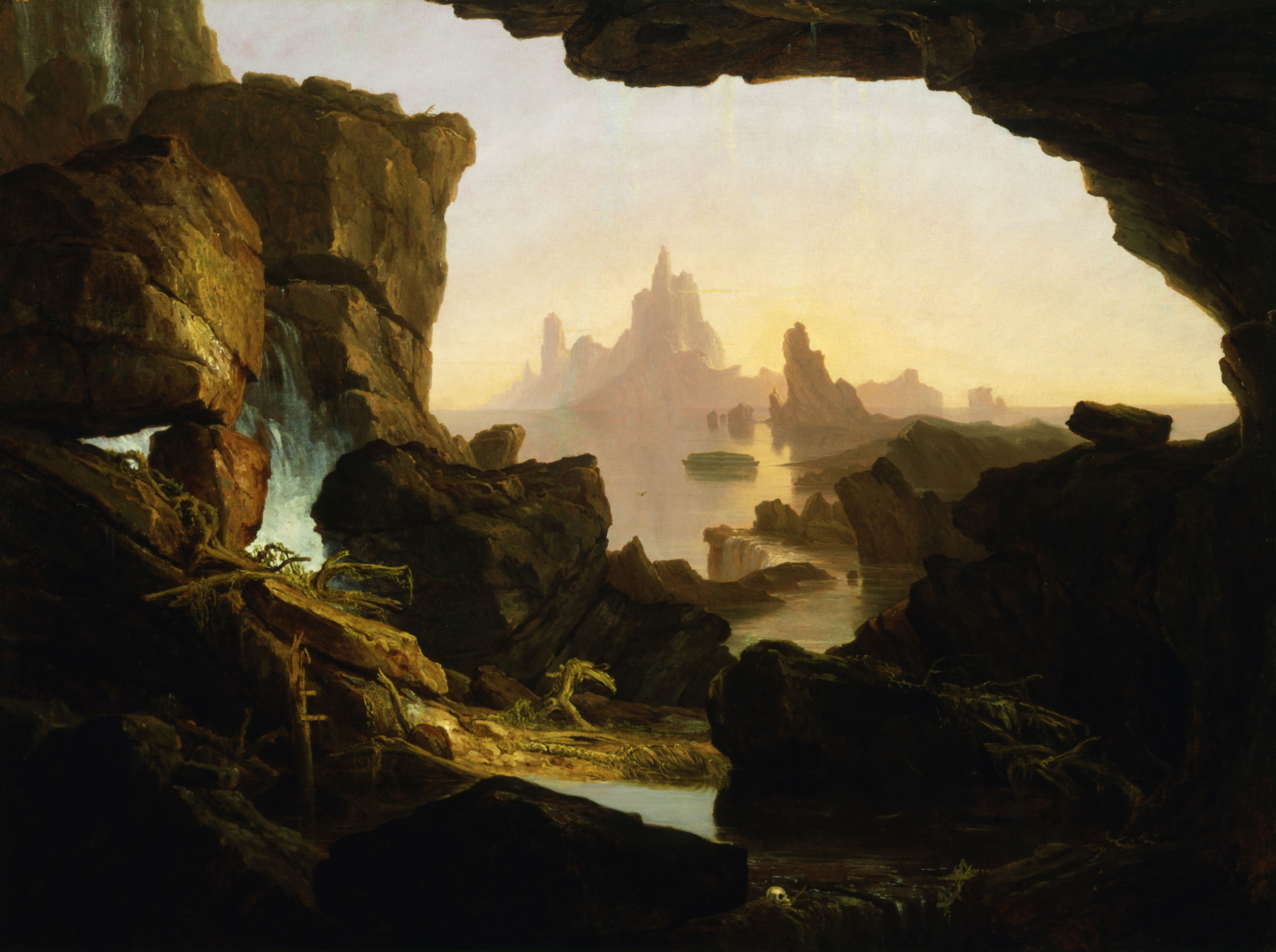
The Subsiding of the waters of the Deluge (1829)
Thomas Cole (1801-1848)
Oil on canvas
Smithsonian American Art Museum
(Thomas Cole captures the peace of the receding floodwaters. Not exactly the most memorable moment in the Flood, but one that fits nicely the landscape style Thomas Cole was known for. Many of his paintings are majestic, but this one looks calm and peaceful to me. Even though there is a skull if you look close enough. Can you find it?)
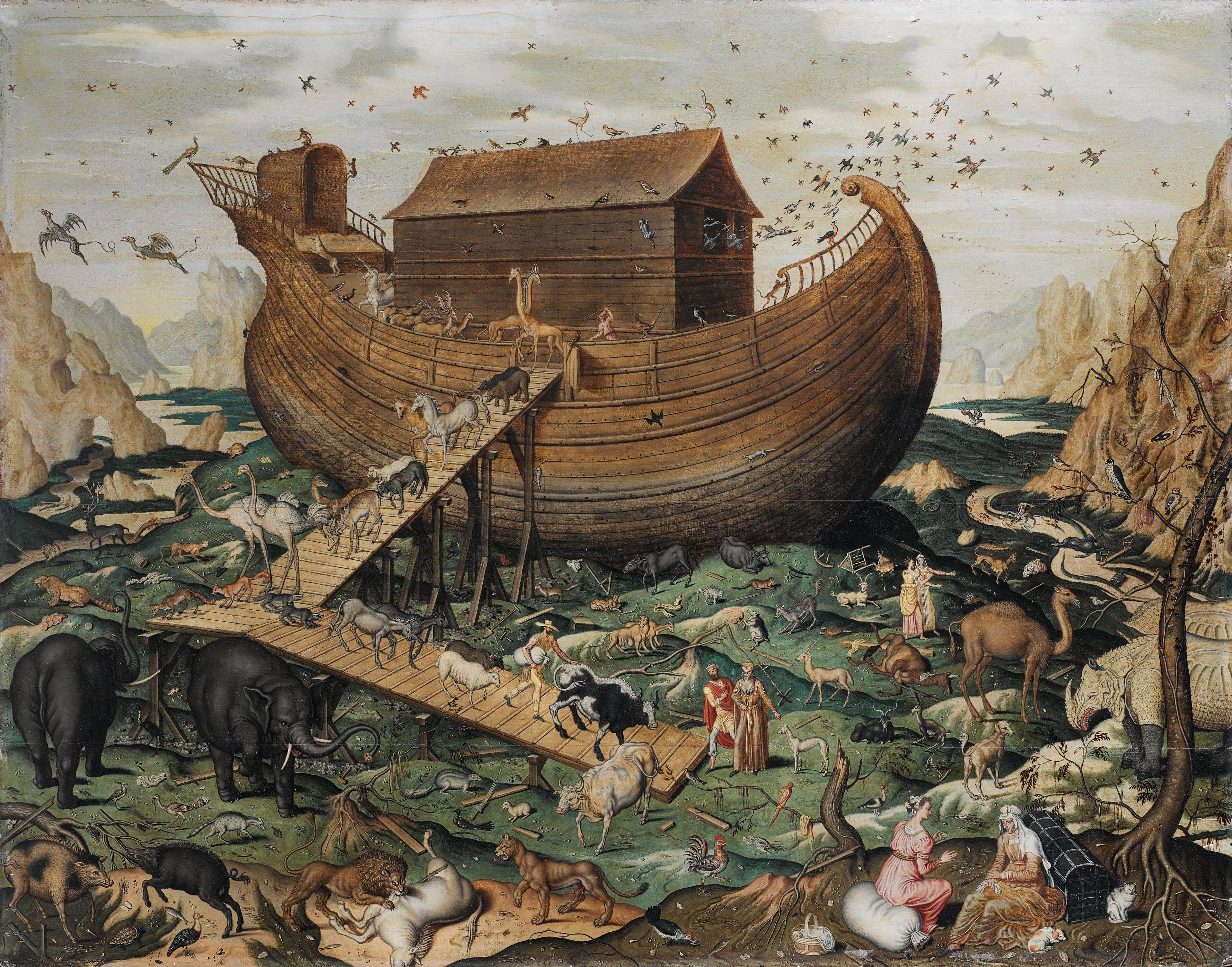
Noah's Ark on Mount Ararat (1570)
Simon de Myle (16th Century)
Oil on panel
Private collection
(Very few paintings show the animals leaving the ark, which I find strange. If I had such skill, I would much rather paint the celebration of survival and promise rather than the impending disaster as the animals enter the ark. I must say, I love the hat the man wears as he guides the cow down he ramp...)
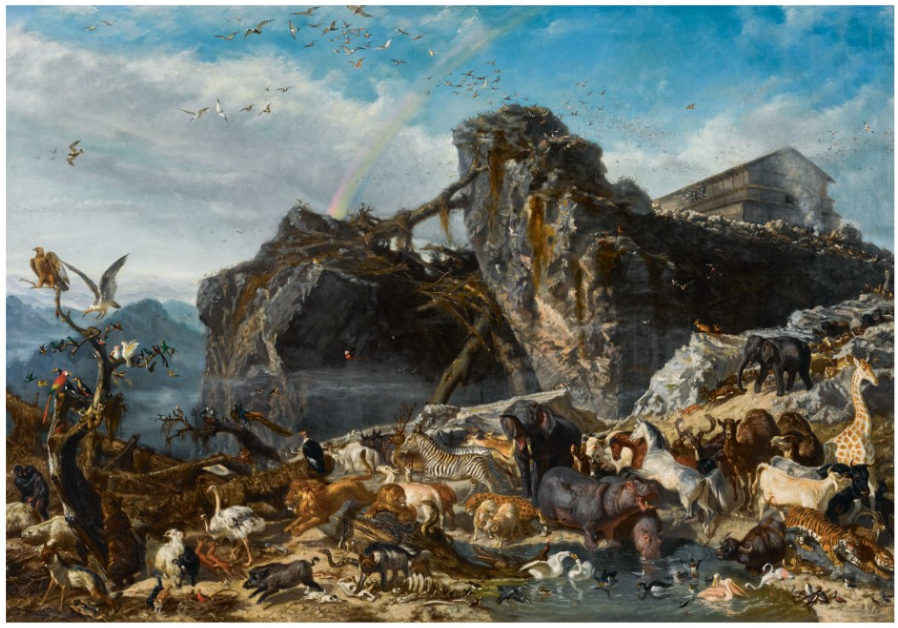
Noah's Ark (1867)
Philippo Palizzi (1818-1899)
Oil on canvas
Museo Capodimonte (Naples, Italy)
(The chaos of leaving the ark. The idea that animals leaving the ark was a "free for all" has been termed by creationists as a "sweepstakes" model of animal dispersal. I like that term, and based on this painting, I bet Philippo Palizzi would too.)
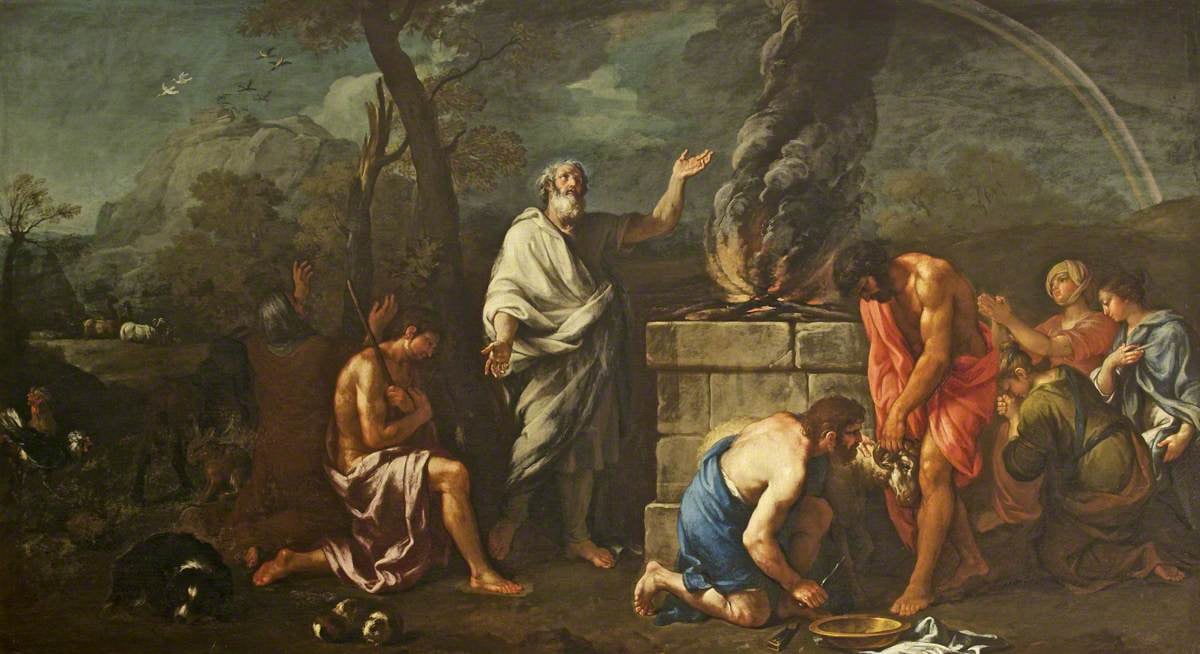
The Sacrifice of Noah (~1720)
Francesco Ferdinandi (1679-1740)
Oil on canvas
National Trust Collection, Wiltshire, England
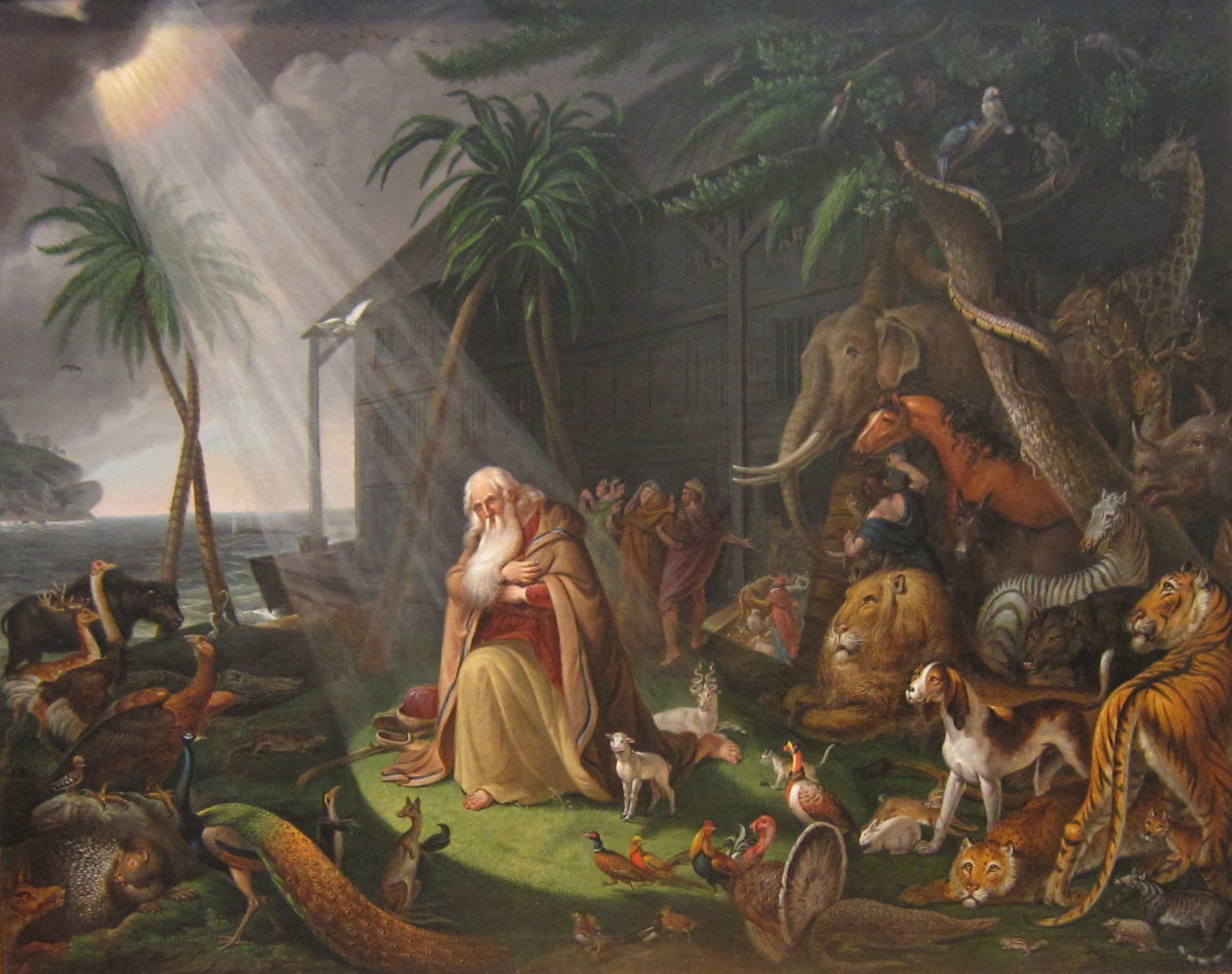
Noah and His Ark (1819)
Charles Wilson Peale (1741-1827)
Oil on canvas
Pennsylvania Academy of Fine Arts, Philadelphia
Chapter 5: Rebellion
As humans multiply, they return full circle back to rebellion. Instead of heeding God's instruction to spread, they gather in one place to build a tower that will reach the heavens. As their ancestors did only a few generations before them, they wanted to be like God.
This action catches the attention of the Lord, who "came down to see the city and the tower." His image-bearers and representatives have fled from their duty to the Lord, instead desiring that "which they have imagined."
The city and the tower is not to be. By confusing the languages of the people, God decisively forces them to disperse and spread, likely in small tribes, to the farther reaches of the earth. As God did at creation and the flood, God's supernatural action instigates the development of the world we now live. It is hardly a stretch of the imagination to imagine these spreading populations of men exploring, taming, conquering, and colonizing the earth. It takes staggeringly few generations to form the world of today.
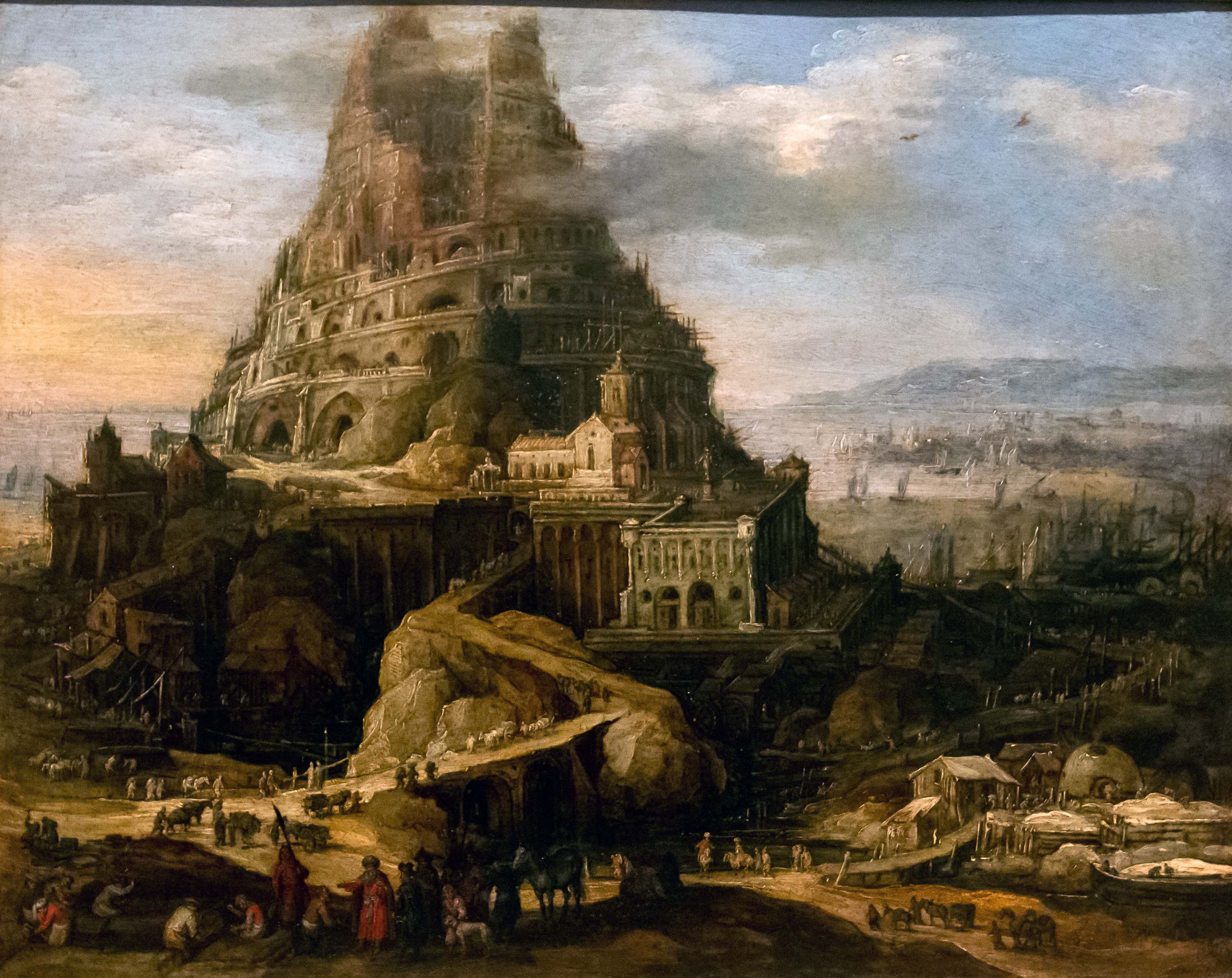
Tower of Babel (From 1595-1605)
Joos de Momper the Younger (1564–1635)
Oil on copper panel
National Museum of Ancient Art
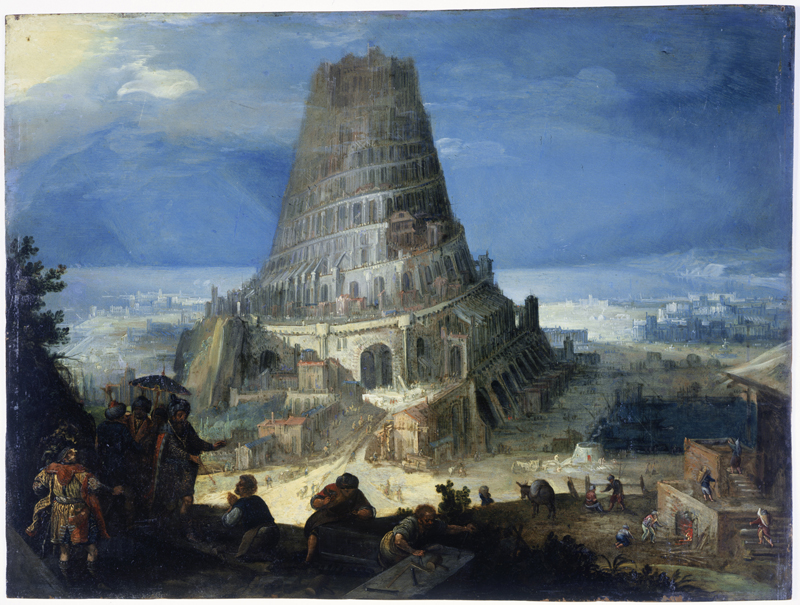
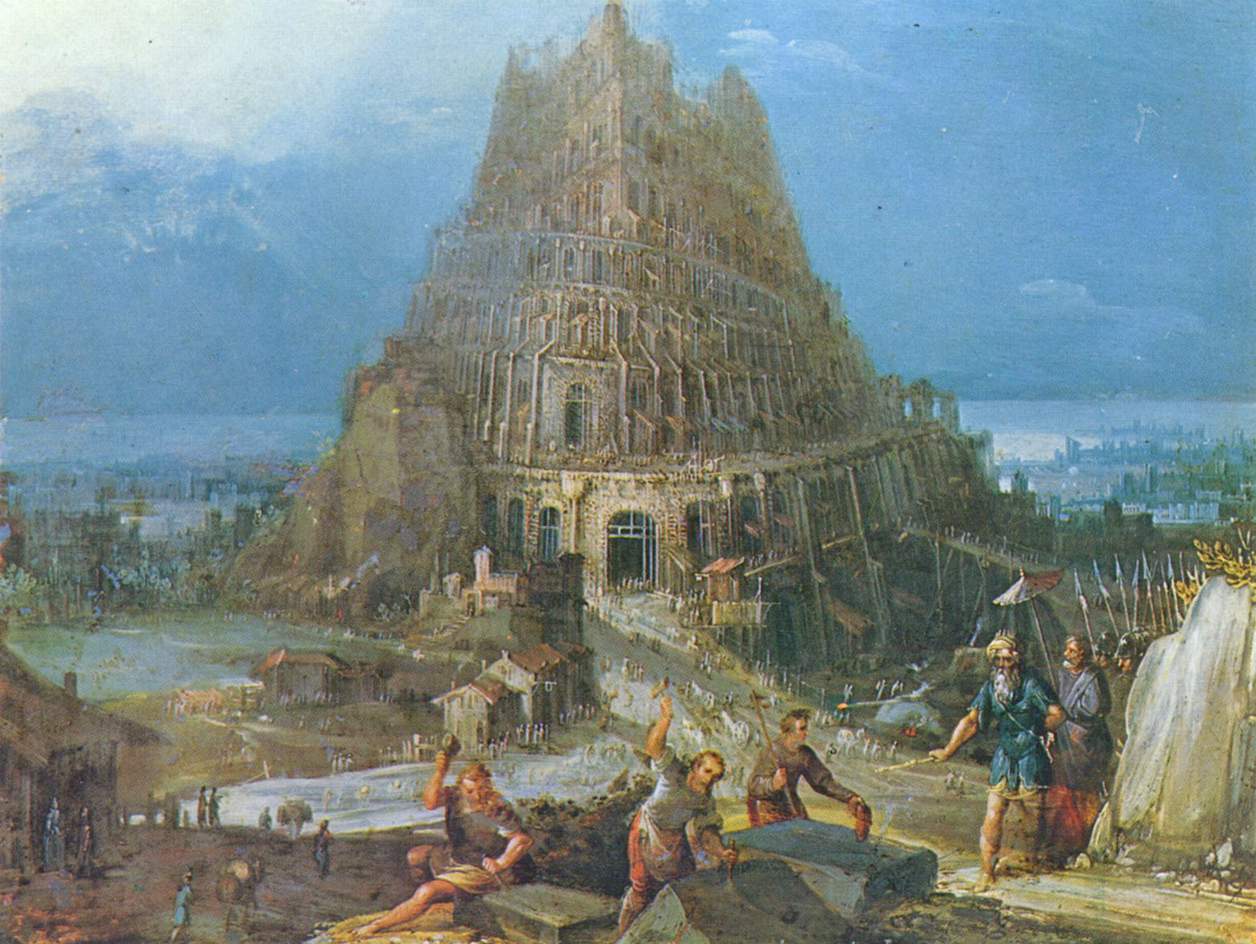
The Tower of Babel (circa 1620)
Lucas van Valckenborch (c. 1535–1597)
Oil on copper
Museum of Art and History Geneva
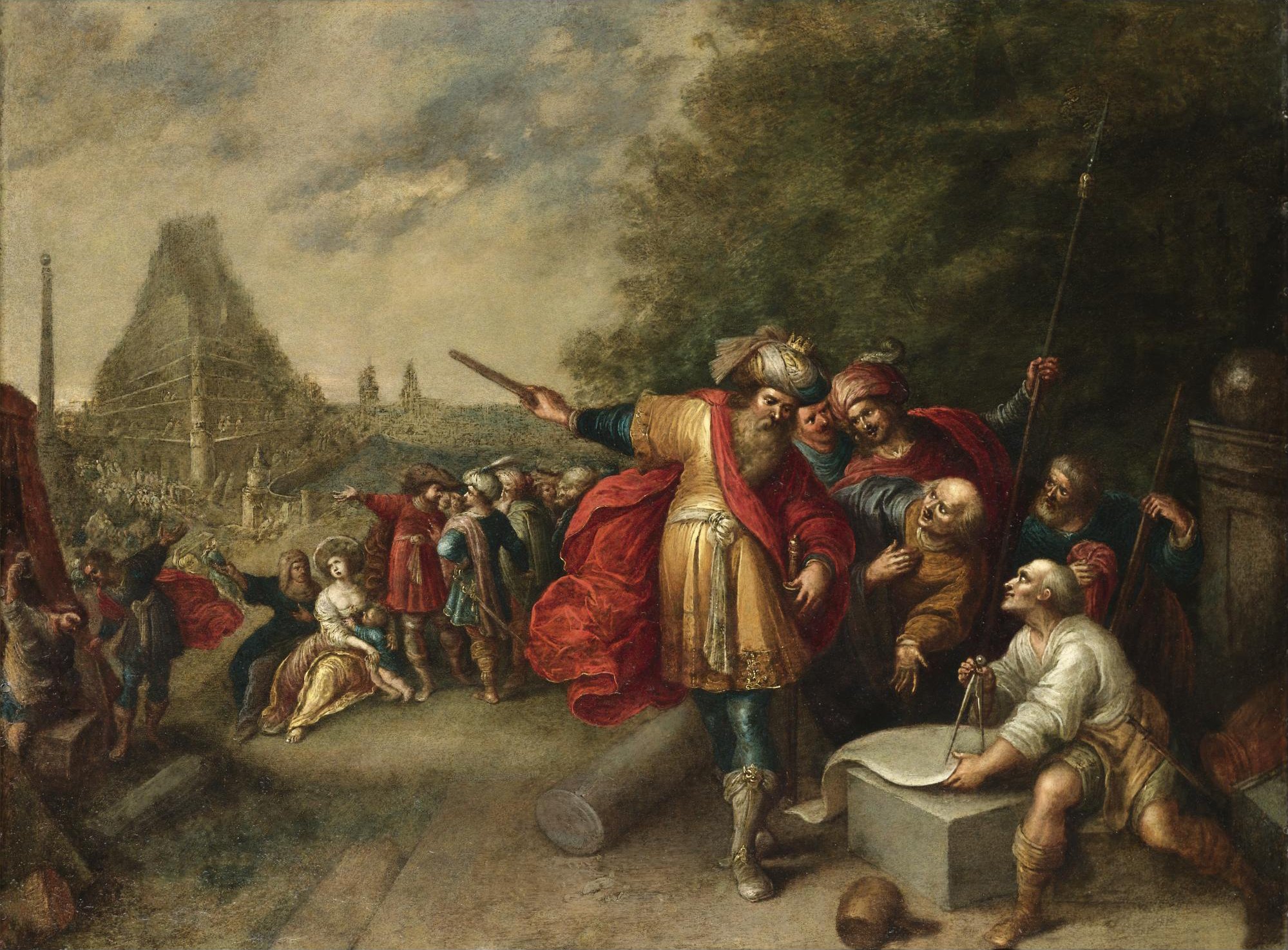
The Tower of Babel (17th Century)
Follower of Frans Fracken the Younger
Oil on copper
Private collection
(In the same way you can always spot a bad guy in a movie, look at the faces of the architects here and tell me they don't know their actions are wicked and in rebellion against God. This is my favorite Babel painting, as it captures not only the tower but also the sinful intent behind it. This is a people in pursuit of their own desires.)