The Genesis of Evolution
By Jake Ramgren
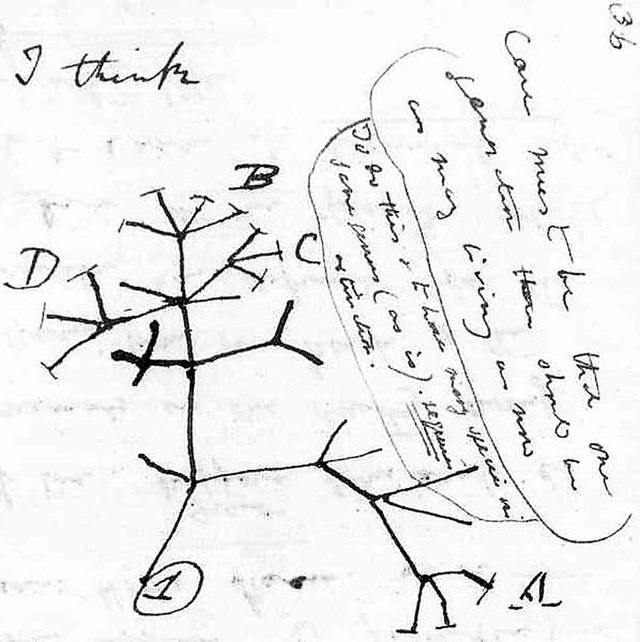
Let's take a look at the history of evolution and how it came about. Darwin's monumental book The Origin of Species represents a dramatic shift in how scientists thought of biology. And as I often say in my lectures, understanding the history of how an idea came about is just as important as understanding the thing itself. Darwin's own thinking, his influences, and his contemporaries all had a pivotal part to play in the formation of the theory of evolution (which, I must clarify, looks a lot different today than it did then). So, it behooves us to take a closer look at the beginning, or "genesis" of evolution theory.
Before we dive in, it is important to know what exactly Darwin's book was. His theory was incredible and elegant, explaining observed biology extremely well. But his implication was also intentionally anti-design, and not just because it proposed millions of years and common ancestry. Darwin's theory was a direct response to a Christian apologetic argument made most famously by Christian biologist John Ray in his book The Wisdom of God Manifested in the Works of Creation (1680). This argument aimed to demonstrate that living things were designed to live in their environments, because their features and forms fit their functions so perfectly. Darwin's idea of natural selection countered this, saying instead that animals were perfectly adapted because of step-by-step adaptations rather than top-down design. In essence, Darwin explained the appearance of design in nature without appealing to a designer.
Before the 19th century, most people assumed that God had created all living things in their present form. But even before Charles Darwin took his famous voyage to the Galapagos and published his monumental book, many naturalists began to suspect that animals and plants are fundamentally changeable. The idea of evolution was widely discussed, though no one knew what mechanism or force could cause species to change.
French naturalist Jean-Baptiste Lamarck is the most notable pre-Darwin evolutionist, and he provided a mechanism called "the inheritance of acquired characteristics." In his theory, an animal gained a new trait during its lifetime and then passed that trait to its own offspring. The classic example of Lamarckism is the giraffe, which according to Lamarck, was a horse-like animal that stretched its neck a lot until the neck actually grew a little, and then this new neck was passed on to the animal's offspring, eventually leading to a new animal with a really long neck after enough generations passed. Lamarck was criticized plenty by his contemporaries and those after him (including Darwin) but his theory is an important steppingstone in the development of Darwin's theory of descent with modification. (It is also noteworthy that in his post-Origin publications, Darwin's view of evolution became ever so slightly more Lamarckian. In discussing the evolution of humans, Darwin proposed that sailors developed far-sightedness and watchmakers became more short-sighted sue to their occupations. This is indistinguishable from Lamarckian "use and disuse" mechanism.)
Another pre-Darwin thinker who proposed evolution was Robert Chambers, whose anonymously published book Vestiges of the Natural History of Creation (1844) proposed a very vague description of both biological and cosmological evolution. Though a popular read among the general public, Chambers' book was considered amateurish by his more academic contemporaries. Indeed, the content was all over the place, covering astronomy, biology, and geology, without providing each topic its required scientific depth. Chambers even included controversial pseudoscience such as spontaneous generation (the creation of living things from nonliving material), which he proposed was caused by electricity. His book shifted public thinking, preparing the everyday man to accept a bold new idea yet to come.
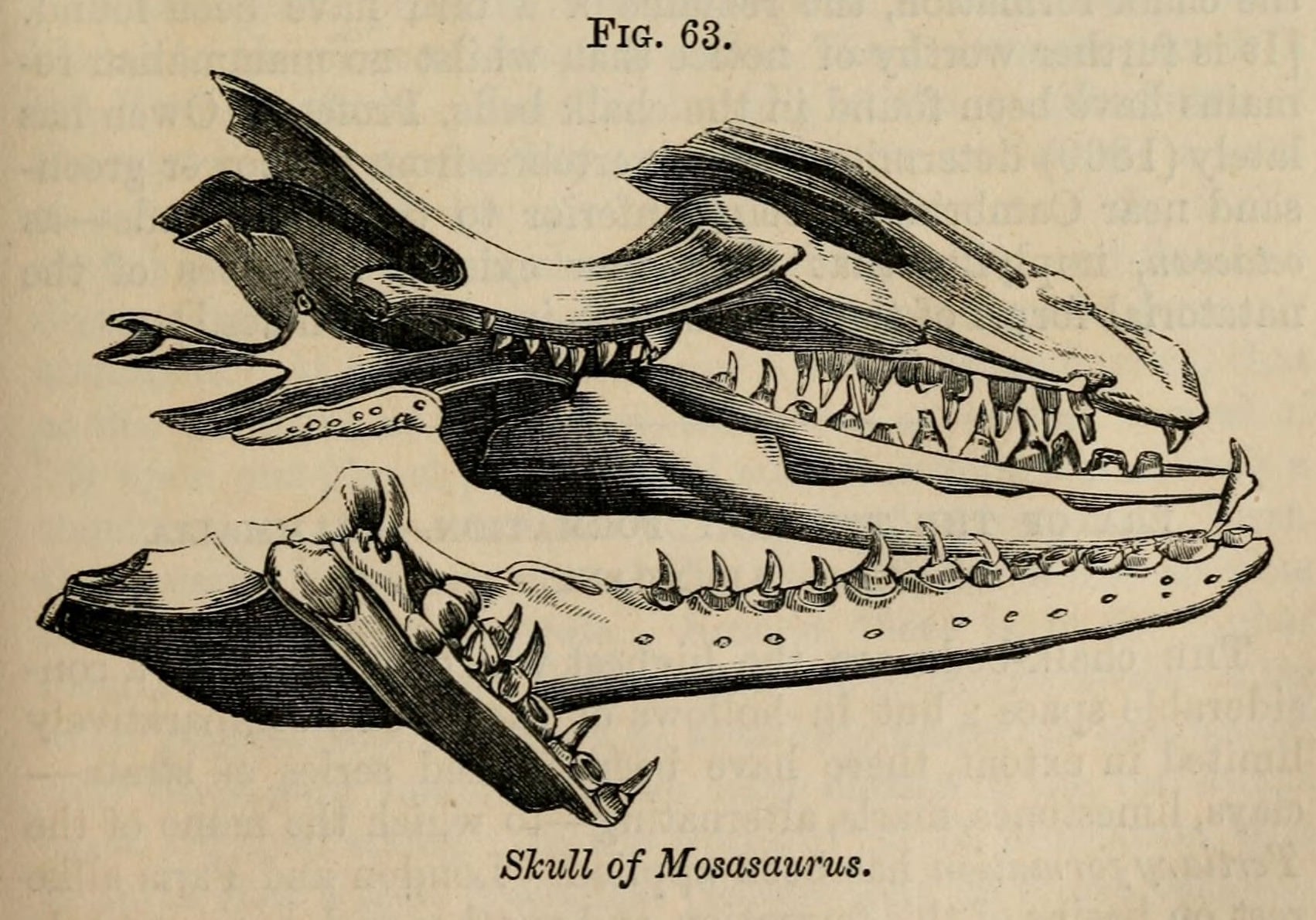
A Mosasaur skull from Robert Chambers' book "Vestiges of the Natural History of Creation"
Meanwhile, Darwin already had his big idea in mind by the time he read Vestiges, and he may have even delayed publishing his own book for fear that his scientist contemporaries would associate his own ideas with the amateurish Robert Chambers. To prove he had what it takes to be a true scientist, Darwin studied barnacles for several years, hoping to earn the respect of his contemporaries before publishing what he knew would be a controversial book. He later wrote to friends how sick and tired he was of looking at barnacles.
When Darwin finally did publish his book On the Origin of Species by means of Natural Selection or the Preservation of Favored Races in the Struggle for Life (yes, that is the full title), he did so because someone else had come up with the same idea independently! Darwin, of course, had formulated his theory of natural selection after studying wildlife in the Galapagos in the 1830s. But Alfred Russell Wallace, an up-and-coming naturalist who was acquainted with Darwin, came up with natural selection on his own, after having a fever dream while sick in the Malay Archipelago. Both he and Darwin had read an important essay by economist Thomas Malthus, who wrote about human competition for limited resources. They both applied this idea to nature and imagined what would happen if animals were competing for food, shelter, mates, and other resources. Organisms that were unable to access these resources would die off or reproduce less, and those that survived and reproduced more would pass on their "fit" traits to their offspring. In this way, nature selects unfit organisms for extinction, thereby changing the species to match what the environment requires.
This idea was first published in essays by both Darwin and Wallace, which were read at the Linnaean Society of London in 1858, with minimal impact to the scientific community. But in 1859, Darwin published his book. He called it his "abstract" and planned to revise it into a much longer volume. While he did make revisions, he never published the complete book he had envisioned. But he did shake world of biology forever.
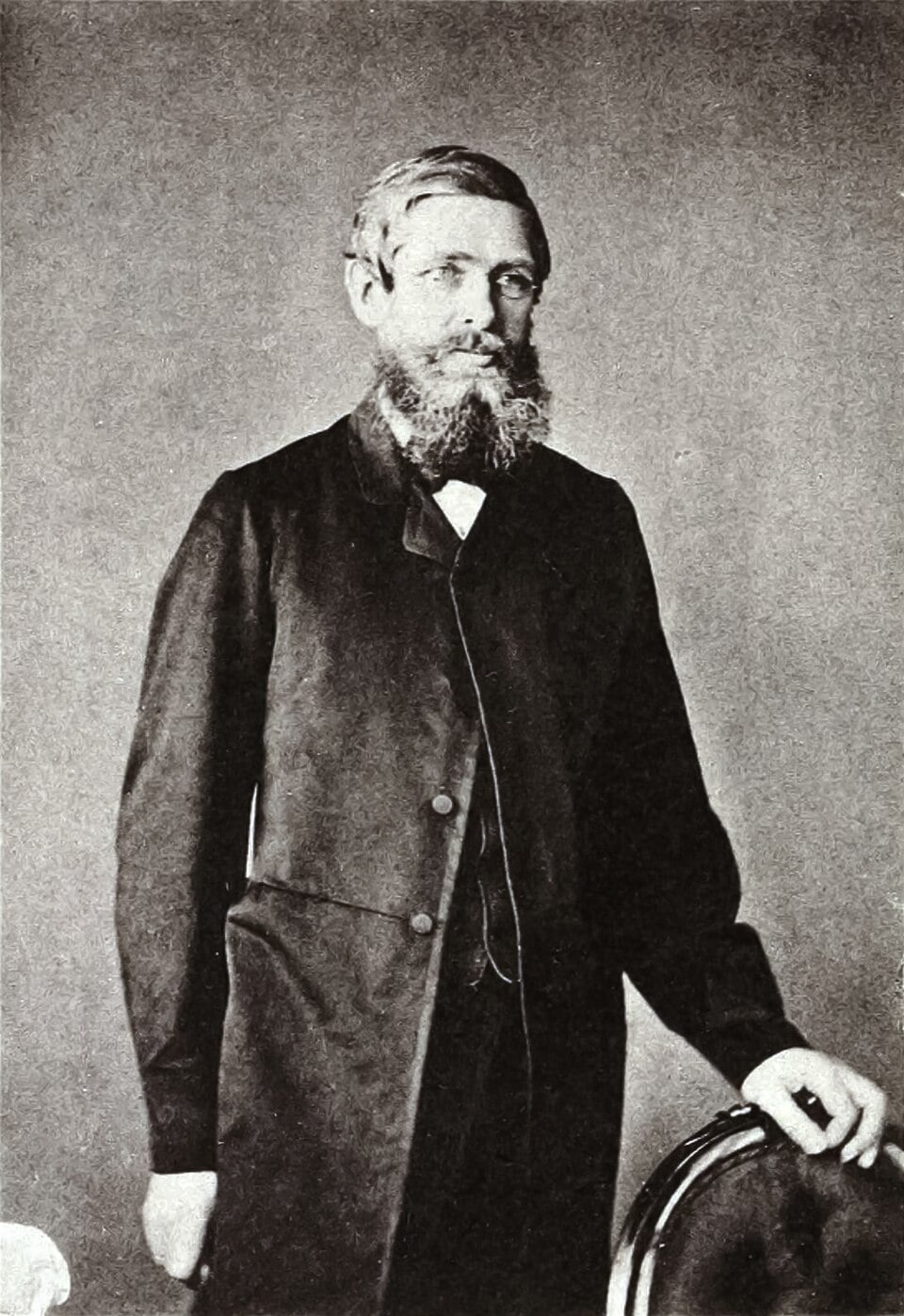
Alfred Russel Wallace, co-discoverer of the mechanism of natural selection.
Want to stay updated on creation science? Subscribe to our newsletter. Want to contribute to the blog? Email a draft or link to an article to creationreformationnewengland@gmail.com
Thank you for subscribing!
Have a great day!
